If you’ve ever grabbed a can of beans from your pantry, filled a metal bucket to soak fresh tomatoes, or unrolled a steel sheet to line a backyard grill, you’ve encountered galvanized steel. As a supplier, I get asked all the time: Is this safe to use around food? The answer isn’t a simple yes or no—it’s tied to a web of global regulations that protect consumers, manufacturers, and vendors. Over the years, I’ve seen customers make costly mistakes by ignoring these rules, and I’ve also worked directly with regulatory teams to ensure our products meet every requirement. Today, I’m breaking down what you need to know about using galvanized steel in food contact applications, how regulations vary by region, and what we do at our shop to keep every batch compliant. Galvanized Steel
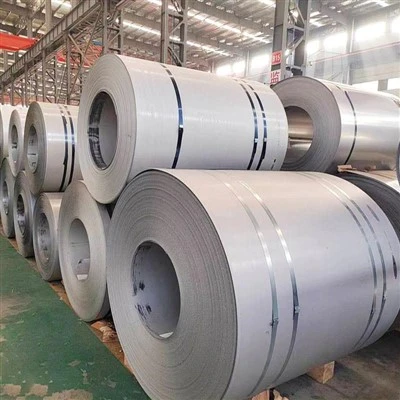
First, let’s start with the basics: What is galvanized steel? It’s a type of steel coated with a thin layer of zinc to prevent rust and corrosion. That zinc coating is non-negotiable for durability, but it can leach into food or drinks under certain conditions. Leaching is the main concern here—if zinc enters your body in high amounts, it can cause nausea, vomiting, or even long-term copper deficiency. That’s why regulators across the globe have set strict limits on how much zinc can transfer from the steel to food.
In the United States, the primary rule comes from the Food and Drug Administration (FDA). The FDA’s Food Contact Substances (FCS) program governs all materials that touch food, and galvanized steel falls under its purview. For decades, the FDA relied on a general standard: for dry foods, galvanized steel was generally safe, but for acidic foods (like tomato sauce, citrus juice, or vinegar), it was a hard no. Why? Acid breaks down the zinc coating, leading to much higher leaching rates. But in 2016, the FDA updated its guidelines to be more specific, replacing that blanket ban with a performance-based standard. Instead of a flat prohibition, now manufacturers (and suppliers like us) must prove that their galvanized steel doesn’t leach more than 5 milligrams of zinc per square inch of steel per day into acidic foods. That might sound technical, but it’s a big shift—it means a galvanized steel bucket that’s fine for storing flour might not be okay for fermenting pickles. The FDA also has a separate regulation for hot-dip galvanized steel, the most common type we supply. Unlike electrogalvanized steel (which has a thinner, more uniform coating), hot-dip involves dipping steel in molten zinc, which creates a thicker layer. The FDA’s rule for this type is clear: it can only be used for food contact if it’s not exposed to high temperatures or acidic conditions. That’s why you’ll almost never see galvanized steel used for cookware or baking sheets—those get hot and often touch acidic ingredients.
Across the Atlantic, the European Union (EU) has its own set of rules, governed by Regulation (EC) No 1935/2004. This regulation sets the overarching principle that all food contact materials must not transfer harmful substances to food, and it delegates specific limits to individual member states. In the EU, galvanized steel is regulated under the EU’s Harmonized Standard for Metallic Materials (EN 10204), which includes a limit of 0.5 milligrams of zinc per kilogram of food (or food simulant) when tested. Wait, that’s a much lower limit than the FDA’s—why the difference? Because the EU uses a food simulant test, which mimics different types of food (acidic, fatty, dry) to measure leaching. For example, for acidic foods, the simulant is a 3% acetic acid solution, and the EU requires that zinc leaching from galvanized steel into that simulant doesn’t exceed 0.5 mg/kg. That standard is strict, and it’s why we go through regular testing for our EU-bound products. We also have to label all galvanized steel for food use clearly, indicating whether it’s suitable for acidic foods, dry foods, or both. In the UK, after Brexit, they adopted a nearly identical standard to the EU for the first two years post-withdrawal, but they’ve since finalized their own version that’s aligned with the EU’s limits for zinc leaching.
It’s not just North America and Europe. Here in Canada, the Canadian Food Inspection Agency (CFIA) aligns closely with the FDA’s guidelines, with a similar 5 mg per square inch per day limit for hot-dip galvanized steel, and a ban on acidic food contact. In Australia and New Zealand, the Australia New Zealand Food Standards Code (Standard 3.2.1) sets a maximum zinc migration limit of 1 mg per square decimeter (roughly 0.06 mg per square inch) for food contact materials. That’s another strict limit, and it means we have to adjust our zinc coating thickness slightly for products headed to Australia to ensure they don’t exceed it. Many of our international clients ask if “food-grade galvanized steel” is a real thing—yes, in regions like Australia and New Zealand, that term refers to steel that meets their specific leaching limits, which are more stringent than the U.S. and EU.
Now, a common question I get: What about applications that aren’t direct food contact, but still near food? For example, a galvanized steel frame for a commercial walk-in fridge, or a roof over a food processing plant. Regulators are a little more lenient here, but they still require that no zinc can drip or contaminate food products. The FDA has a rule that indirect food contact materials (like building materials) must not “adversely affect the safety” of food, so we have to make sure any galvanized parts used in these settings are sealed or coated to prevent zinc from coming into contact with food surfaces. In the EU, indirect food contact materials are governed by Regulation (EC) No 1935/2004 as well, but they use a “safe harbour” approach: if a material is listed on the EU’s positive list for indirect food contact, it’s automatically approved. We’ve done the work to ensure our galvanized steel is on that list, which makes it easier for customers to use it in these secondary applications.
As a supplier, I can’t just sell any galvanized steel to food contact clients—we have to go the extra mile to meet these regulations. Here’s what we do at our shop to ensure compliance: First, every batch of galvanized steel we produce for food use gets tested by a third-party lab. We use labs that are accredited by the FDA, EU, and relevant regional bodies, so their test results are accepted anywhere in the world. The tests check for zinc leaching under different conditions: dry, acidic, and even hot (since some customers want to use galvanized steel for outdoor equipment that might get sun-heated). We keep detailed records of every test for three years, which is required by most regulators in case of an audit. Second, we label every product clearly, not just with the size and thickness, but with information about which food applications it’s safe for. For example, a roll of galvanized steel might be labeled “Suitable for dry food storage, not for acidic food contact” for U.S. clients, and “Compliant with EN 10204, zinc migration <0.5 mg/kg” for EU clients. Third, we refuse orders that don’t align with regulations. Last year, a customer asked for galvanized steel to line a commercial pickle fermentation tank—acidic, and a direct food contact application. We couldn’t do it, so we referred them to a stainless steel supplier instead. It’s not easy to turn down a sale, but it’s the right thing to do to keep our clients and consumers safe.
I’ve also seen common mistakes that vendors make when working with galvanized steel in food contact. One of the biggest is reusing galvanized steel that was originally made for non-food use. For example, a builder might take a galvanized pipe from a construction site and use it to store cooking oil. That’s a bad idea—non-food grade galvanized steel often has a thicker, less uniform zinc coating, which can leach more. Another mistake is not accounting for temperature. A lot of people don’t realize that high speeds accelerate zinc leaching. Last summer, a client used galvanized steel to make a grill, and within a few weeks, the zinc coating started to peel off into the food. We told them that galvanized steel isn’t designed for high-heat use, and offered them a stainless steel alternative at a small markup. They were grateful—they would have had to replace the grill entirely if they’d kept using galvanized.
There’s a lot of misinformation out there about galvanized steel and food safety. Some people say all galvanized steel is toxic, others say it’s totally safe for any food use. The truth is, it’s a versatile material when used correctly, but it’s not one-size-fits-all. The regulations exist because zinc is a necessary mineral for humans, but too much of it can be harmful. For example, the FDA says that the daily recommended intake of zinc for adults is 8-11 milligrams, so a single square inch of galvanized steel that leaches 5 mg per day could add a significant amount if you’re eating food from it every day. That’s why the limits are there—they’re set to keep intake well below harmful levels.
Looking ahead, regulations for galvanized steel in food contact are only going to get stricter. The WHO (World Health Organization) recently published a report suggesting a global standard for zinc leaching in food contact materials, which would likely align with the EU’s 0.5 mg/kg limit. That means we’ll have to adjust our testing and production processes to meet a unified standard, which is actually a good thing—it will make it easier for clients to do business internationally. We’re already working with a regulatory consultant to prepare for this upcoming change, so our products will be ready when it takes effect.
Whether you’re a commercial kitchen owner, a small-batch food producer, or someone looking to store food at home, understanding these regulations is key to making safe choices. As a supplier, I’m here to help—we don’t just sell steel, we provide guidance on which products are right for your specific needs. If you’re unsure whether galvanized steel is appropriate for your food contact application, or if you need to verify that a batch meets regulatory standards, don’t hesitate to reach out. Let’s work together to keep your products safe and compliant.
Stainless Steel Sheet/Plate References
Code of Federal Regulations, Title 21, Part 175.300: Indirect Food Additives: Adhesives and Components of Coatings
European Commission, Regulation (EC) No 1935/2004 of the European Parliament and of the Council on materials and articles intended to come into contact with food
Canadian Food Inspection Agency, Food Contact Materials: Galvanized Steel
Australia New Zealand Food Standards Code, Standard 3.2.1: Food Contact Materials and Articles
FDA, 2016 Update to Food Contact Substances for Metals and Alloys
World Health Organization, Guidelines for Chemical Risks in Food, Zinc Leaching from Food Contact Materials
Wuxi Jin Ming Jian De Industry & Trade Co., Ltd.
Wuxi Jin Ming Jian De Industry & Trade Co., Ltd. is one of the most professional galvanized steel manufacturers and suppliers in China, also supports customized service. With abundant experience, we warmly welcome you to wholesale CE approved galvanized steel in stock here from our factory. If you have any enquiry about quotation, please feel free to email us.
Address: 2102-2105, Yuexing Building, Guangnan Road, Liangxi District, Wuxi City, Jiangsu Province, China.
E-mail: info@wxjmjdss.com
WebSite: https://www.jmjdsteelexp.com/
