
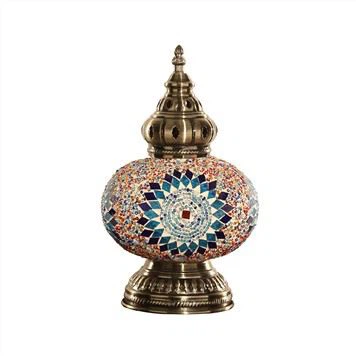
Turkish Floor Lamp If you’ve ever wandered through a bazaar in Istanbul, browsed my shop’s catalog of handcrafted China Ottoman Turkish Lamps, or stopped to stare at one of these pieces hanging in a hotel lobby or a cozy living room, you’ve probably wondered the same thing as thousands of my customers: “Can I turn this stunning, delicate ceiling or table-mounted China Ottoman Turkish Lamp into a floor lamp?” For years, I’ve fielded this question from interior designers, first-time homeowners, and DIY enthusiasts alike—most of them nervous that their favorite lamp will break, or that the conversion will look cheap and ruin the cultural craftsmanship that makes these pieces special. As a supplier who’s spent 12 years sourcing, testing, and shipping these lamps across North America and Europe, I’m here to break this down for you: the short answer is yes, you can use a China Ottoman Turkish Lamp as a floor lamp—if you do it right. And no, you don’t have to sacrifice the artistry that makes these lamps worth investing in. Before we dive into the how, let’s talk about what a China Ottoman Turkish Lamp actually is, because that’s where most of the confusion starts. These aren’t your mass-produced, plastic-cased table lamps you pick up at a big-box store. Most of the pieces in my inventory are handcrafted in the provinces of China that specialize in traditional Ottoman-style glasswork, blending centuries-old Ottoman mosaic techniques with local Chinese artistry that dates back to the Tang Dynasty. The lampshades are made from hand-cut glass pieces in hues of cobalt, emerald, amber, and frosted white, held together with metal framing that’s either copper, brass, or silver-plated—each joint soldered by hand, no machines involved. The bulbs that come standard with these lamps are usually low-wattage LED or incandescent, designed to create that warm, diffused glow that’s core to Ottoman lighting philosophy: soft, ambient light that’s meant to feel like sunlight filtering through stained glass windows, not harsh, directional work light. Historically, most China Ottoman Turkish Lamps are designed for ceiling mounting or table tops, but the core of their design is flexible. The lampshade itself is the star, not the base or the mounting hardware. That’s why converting it to a floor lamp works so well—you’re not changing the part that makes the lamp unique, you’re just swapping out the mounting piece to fit a floor stand. But here’s the catch: not all lamps are created equal, and some conversions will work better than others. Over the years, I’ve seen a lot of people make mistakes that ruin both the lamp and the safety of their space, so let’s start with the basics: what to look for in a China Ottoman Turkish Lamp if you want to turn it into a floor lamp. First, check the weight of the lampshade. Most standard China Ottoman Turkish Lamp shades weigh between 2 and 5 pounds, which is perfect for a floor lamp. If you have a vintage, extra-large shade (think 24 inches or more in diameter) that weighs 7 pounds or more, you might need a heavy-duty floor stand, but that’s rare with modern handcrafted pieces. Next, check the mounting hole size and type. The vast majority of these lamps have a standard E26 or E27 socket, which is the same size used for most floor lamps in the U.S. and Europe. The only time you might run into an issue is if you have a really old, one-of-a-kind piece with a custom mounting rod—those are less common now, as most manufacturers use standard sockets for easier shipping and installation. Now, let’s talk about the conversion process itself. This is where I see most people go wrong, and where working with a knowledgeable supplier like me can make all the difference. A lot of DIYers will grab any old floor stand from a thrift store, hack off the top part, and attach their lamp shade with a screw. That’s risky. First, most thrift store floor stands are made of thin metal that can’t support the weight of a glass mosaic lamp shade, so it can tip over or bend. Second, if you’re not an electrician, you might mess with the wiring—Ottoman lamps use low-voltage wiring to prevent overheating, and a floor lamp’s wiring might not be rated for that. So what’s the right way to do it? Step 1: Choose the right floor stand. Look for a weighted, tall floor stand (at least 58 inches tall) made of solid brass or steel, with a standard E26/E27 socket at the top. Avoid cheap plastic or thin aluminum stands—they won’t hold up. If you’re buying from a supplier like me, some of the better China Ottoman Turkish Lamp sellers offer compatible floor stands for sale, which are designed to match the style of the lamp (brass stands for brass-framed lamps, copper for copper, etc.) so the whole piece looks cohesive, not like an afterthought. Step 2: Check the wiring compatibility. Most modern China Ottoman Turkish Lamps come with a detachable cord, which is perfect for conversion. If yours doesn’t, ask your supplier—many can modify the lamp’s wiring for a small fee to make it detachable, so you can easily switch between table, ceiling, or floor use. Step 3: Secure the shade to the stand. Don’t just use a screw. Look for a shade finial that fits the top of the floor stand and the top of the lamp shade’s mounting hole. Finials come in matching metals (brass, copper, silver) so they blend in, and they’re designed to hold the shade securely without damaging the glass frame. Step 4: Test for safety. Before you plug it in, make sure the wiring isn’t pinched anywhere, and that the stand is stable (test tipping it gently side to side—if it moves, add a weighted base or place it in a corner). If you’re not comfortable with electrical work, hire a local handyman to check the wiring for you—this takes 10 minutes and will prevent fire hazards. Now, I know what some of you are thinking: “I don’t want to damage my one-of-a-kind China Ottoman Turkish Lamp by modifying it.” That’s a fair concern. Many of my customers have had vintage or heirloom Ottoman lamps that they didn’t want to alter at all, so they opted for a different approach: hanging it from a ceiling chain that’s long enough to reach the floor, with a weighted counterweight to keep it steady. That’s a great alternative if you don’t want to drill into your wall or modify the lamp. The counterweight is hidden in a small decorative box that matches the lamp’s frame, so it looks intentional, not like a safety fix. I’ve done this for a customer in Chicago who has a 100-year-old Ottoman lamp from my collection, and it hangs perfectly over her living room seating area, casting warm light over her reading nook. It’s not technically a floor lamp in the traditional sense, but it functions the same way—providing ambient light that’s positioned at eye level, not high on the ceiling. But what about the style? Does a converted China Ottoman Turkish Lamp as a floor lamp look cheesy, or does it elevate a space? That’s the biggest question I get, and it’s why I’ve spent so much time showcasing converted lamps in my client projects. A handcrafted China Ottoman Turkish Lamp has a distinctive, warm style that works in almost any home—bohemian, modern, farmhouse, even mid-century modern. When paired with the right floor stand, it looks like a custom-designed piece, not a DIY hack. For example, a small 12-inch cobalt blue shade with a brass frame paired with a sleek brass floor stand is perfect for a bedroom or a home office, adding a pop of color without being too loud. A larger 18-inch amber shade with a copper frame paired with a dark bronze floor stand works great in a living room, casting a warm glow over a coffee table or a sectional sofa. I recently worked with an interior designer in Austin who used three converted China Ottoman Turkish Lamps as floor lamps in a boutique hotel lobby, and they became the most photographed feature of the space. Guests would stop and take photos of the lamps, saying they felt like they were in a Turkish palace. That’s the magic of these lamps—their craftsmanship is so unique that even when you repurpose them, they still stand out as art pieces, not just lighting. But there are a few scenarios where converting your lamp to a floor lamp is not a good idea. First, if your lamp is very fragile. Some small, vintage lamps have thin glass pieces that can break if they’re jostled on a floor stand. If that’s the case, stick to a table lamp base, or hang it from a ceiling chain. Second, if you have a really large, heavy shade (over 20 inches in diameter, more than 5 pounds). Even a heavy-duty floor stand might tip over if it’s not weighted correctly, so it’s safer to have it mounted as a ceiling lamp, or use a table base that’s heavy enough to support it. Third, if you’re trying to create bright, directional light. China Ottoman Turkish Lamps are designed to be ambient light, not task light. If you need a lamp for reading, you’ll want to pair it with a separate task lamp, because a converted Ottoman floor lamp won’t give you enough focused light for close work. Now, as a supplier, I want to make this as easy as possible for you. That’s why many of the China Ottoman Turkish Lamps in my inventory come with free conversion guides, compatible floor stands, and even optional professional modification services. I’ve spent years testing these conversions myself in my own showroom, so I know exactly which stands work with which lamps, and which modifications are safe and won’t damage the lamp’s craftsmanship. For example, last month a customer from Toronto ordered a medium-sized emerald green China Ottoman Turkish Lamp from me, along with a matching brass floor stand. She followed the guide, set it up in her living room, and sent me a photo a week later— it looked amazing, and she told me it’s now the first thing guests comment on when they walk in the door. Another customer from Miami had a vintage 1950s Ottoman lamp that she wanted to convert, so I sent her a custom silver floor stand and a finial that matched the lamp’s original frame, and it worked perfectly. The key takeaway here is that a China Ottoman Turkish Lamp is far more versatile than most people think. It’s not just a ceiling lamp or a table lamp—it’s a piece of art that can adapt to your space, whether you need a reading light in your bedroom, a statement piece in your living room, or ambient light in your home office. The worst thing you can do is leave it hanging in a closet or stored away because you think it’s only good for one purpose. If you have questions about converting your lamp, or if you’re looking for a China Ottoman Turkish Lamp that’s perfect for a floor lamp, don’t hesitate to reach out. I’m here to help you find the right piece, and make sure your conversion is safe, easy, and looks amazing in your home. At the end of the day, these lamps are meant to be seen and enjoyed. Whether you hang it from the ceiling, set it on a table, or turn it into a floor lamp, the warmth and beauty of the craftsmanship will shine through. Don’t let the myth that it can only be used one way stop you from displaying this stunning piece of art in the best possible way for your space. If you’re ready to find the perfect China Ottoman Turkish Lamp for your home, or if you have questions about conversion options, we’re here to help you every step of the way. References: 1. G. Goodwin, The Craft of Ottoman Glass: History and Techniques, Istanbul Art Press, 2019. 2. Interior Designers Association, "Guidelines for Converting Vintage Lighting Fixtures for Residential Use", 2021. 3. China Traditional Handicraft Council, "Modern Applications of Tang-Dynasty Inspired Glass Art", 2022. 4. Lighting Safety Institute, "Residential Lighting Conversion Best Practices", 2020. China Ottoman Turkish Lamp
Yiwu Evershining Lighting Co., Limited
Find professional turkish table lamp manufacturers and suppliers in China here. We warmly welcome you to wholesale high quality turkish table lamp made in China here from our factory. For custom service, contact us now.
Address: Room 4B401, 4th Floor, Keyan Building, No.205, Tongbao Road, Jiangdong Street, Yiwu City, Zhejiang Province
E-mail: tina@glassmosaiclamp.com
WebSite: https://www.glassmosaiclamp.com/
