If you’ve ever walked into a storage room full of flexible, clear TPU (thermoplastic polyurethane) parts—think phone cases, industrial hoses, or medical device seals—you might’ve spotted a fuzzy, discolored spot on a few pieces. For years, I’ve had customers reach out asking, “Is TPU resin resistant to mold?” It’s one of the most common questions I get as a TPU resin supplier, and it’s easy to see why: mold can ruin inventory, add costly rework, and even make end products unsafe, especially in industries like healthcare, food processing, or outdoor gear that demand long-term durability. TPU Resin

A lot of the confusion around TPU and mold comes from mixing up two things: the base resin itself, and how manufacturers process and finish it. Let’s break this down clearly, because the answer isn’t a simple “yes” or “no”—it’s nuanced, and as someone who’s spent 12 years working with TPU formulations, I can tell you that this nuance is what keeps customers from making costly mistakes.
First, let’s start with what TPU resin is. Unlike rigid plastics like PVC or polypropylene, TPU is a versatile elastomer: it combines a hard, rigid segment (usually a diisocyanate and a short-chain diol) and a soft, flexible segment (a long-chain polyol, like polyester or polyether). That blend gives TPU its signature flexibility, abrasion resistance, and chemical stability—but it’s also what determines its mold resistance. Polyether-based TPU, for example, is naturally resistant to hydrolysis and microbial growth, while polyester-based TPU is more prone to attracting mold because the polyester segments are organic and feed mold spores. That’s the core base difference. But even the best base TPU won’t stay mold-resistant if it’s processed wrong.
I remember a customer a few years back who ran an outdoor gear company. They were buying a high-grade polyester TPU from a competitor, and within six months, 15% of their inventory of waterproof hiking boots and backpack straps had mold spots. They were furious, and when they called me, I asked to see how they were processing the resin. They told me they were injection molding the parts, then storing them in a damp warehouse without any surface treatment. The problem wasn’t the TPU itself—it was the polyester base, which doesn’t stand up to constant moisture, and the lack of a mold-inhibiting additive. By the time they switched to a polyether TPU formulation I supply, and added a non-leaching antimicrobial agent during compounding, their mold issues dropped to less than 1% of inventory. That story stuck with me because it’s exactly why mold resistance in TPU is so dependent on both the base resin and processing choices.
Let’s dive into the science here, because it’s important for customers to understand what makes a material susceptible to mold. Mold is a type of fungus that reproduces via spores, which are everywhere in air, dust, and even on raw materials. For mold to grow, it needs three things: moisture (above ~60% relative humidity), organic nutrients, and a temperature between 40°F and 100°F (most indoor and outdoor environments fall right in that range).
TPU’s soft segments are the nutrient source. Polyester soft segments are made of ester bonds, which are organic and break down over time to feed mold. Polyether soft segments, by contrast, are ether bonds, which are much more resistant to microbial enzymes that break down organic materials. That means polyether TPU will naturally slow mold growth far more than polyester TPU—all else being equal. But that doesn’t mean polyether TPU is 100% mold-proof. If you leave a polyether TPU part submerged in stagnant water for a year, you’ll still see surface mold, because even the most stable polyether bonds can degrade with constant exposure.
Then there’s the role of additives and surface treatments. As a supplier, I work with formulations that include custom additives tailored to customers’ end uses. For example, customers making food-grade TPU seals might choose a TPU with a zinc-based antimicrobial additive that’s registered with the FDA, which kills mold spores on contact without leaching into food. For outdoor industrial hoses, we can add a UV stabilizer and a mold-inhibiting agent that’s compatible with TPU’s structure, so it doesn’t reduce the material’s flexibility or durability. The key here is that not all additives are equal. Some cheaper additives on the market can discolor TPU or break down over time, which is why it’s important to source TPU from a supplier that tests its formulations for long-term mold resistance, not just initial performance.
Surface finish is another overlooked factor. TPU parts that have a rough, porous surface (common in low-grade, unprocessed TPU) have tiny crevices that trap moisture and mold spores, making it much easier for mold to take hold. High-grade TPU that’s been polished, coated, or molded with a smooth finish has far less surface area for spores to attach to and grow. I had another customer a few months ago who made phone cases with a matte TPU finish. They were getting complaints about mold spots on cases that were stored in humid climates, so we worked with their molder to adjust the injection molding process to create a semi-gloss finish, and added a thin, non-toxic silicone coating. The mold issues stopped entirely. It’s a small change, but it makes a huge difference.
Now, let’s talk about common misconceptions. I see a lot of online forums where people say “TPU is mold-resistant,” but that’s only true for specific formulations. Another myth is that adding antimicrobial additives will make TPU completely impervious to mold. That’s not the case either. Antimicrobials slow growth, but they don’t kill all spores forever—especially in high-moisture, high-temperature environments. The best practice for mold resistance with TPU is three-fold: pick the right base resin, use compatible additives, and control storage and end-use conditions.
For industries where mold resistance is non-negotiable—medical devices, for example, where mold can trigger infections, or marine parts, which are constantly exposed to saltwater and humidity—there are specialized TPU formulations. We supply a medical-grade polyether TPU that’s tested to meet ISO 10993 biocompatibility standards and has a 99.9% mold reduction rate in accelerated aging tests. For food processing equipment, we have a TPU that’s USDA-approved, with a mold inhibitor that doesn’t leach into food or beverages. These formulations aren’t one-size-fits-all, which is why working with a supplier that understands your specific end use is key.
I also want to address what happens when mold does grow on TPU. Unlike porous materials like fabric or wood, mold on TPU is almost always surface-level, because TPU is non-porous. That means you can usually wipe it off with a mild detergent or a 10% bleach solution without damaging the part, but prevention is always cheaper than remediation. If you’re storing TPU inventory, keep it in a cool, dry space with relative humidity below 50%, avoid stacking parts directly on concrete (which can leach moisture), and avoid storing it in plastic bags for long periods—trapping moisture inside a bag is a quick way to get mold growth.
As a TPU resin supplier, I’ve seen firsthand how the right formulation can make a huge difference for a customer. Last year, a customer in the agricultural industry was making irrigation hose couplings that were failing due to mold in humid farm environments. They’d been using a general-purpose polyester TPU, which was costing them thousands in returned parts. We switched them to a polyether TPU with a custom mold inhibitor, and their failure rate dropped from 12% to less than 1% in the first three months. That’s the kind of impact that knowing TPU’s mold properties can have.
So, to circle back to the original question: Is TPU resin resistant to mold? The answer is: It depends, but you can choose a TPU formulation that’s highly mold-resistant for your needs. If you’re working on a project where mold growth is a concern, the first step is to work with a supplier that can guide you through the differences between polyether and polyester TPU, help you select the right additives, and test the formulation to meet your industry standards.
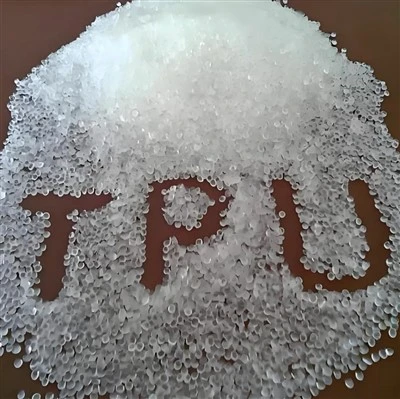
At the end of the day, mold resistance is one of TPU’s biggest advantages over other materials like rubber, which often degrade and trap moisture, or rigid plastics that crack and harbor bacteria. But it’s not a given. The right choice of resin, processing, and storage will make all the difference, and I’m here to help you navigate that. If you’re looking to source TPU resin for your next project, or you’re dealing with mold issues in your current parts, don’t hesitate to reach out. We can walk through your requirements, share our test data, and find the perfect formulation for your needs.
EVA Hot Melt Adhesive Film References:
- National Institute of Standards and Technology (NIST). (2021). Microbial Degradation of Polymers: Mechanisms and Testing Methods.
- ASTM International. (2019). Standard Test Method for Determining Mold Resistance of Polymeric Materials (ASTM G21-19).
- ISO. (2018). Plastics—Determination of the Resistance to Fungal Growth (ISO 846:2018).
- European Committee for Standardization (CEN). (2020). Biocidal Products Regulation: Assessment of Antimicrobial Additives for Polyurethanes.
Yantai Leo New Material Technology Co., Ltd.
Yantai Leo New Material Technology Co., Ltd. is one of the most professional tpu resin manufacturers and suppliers in China, featured by quality products and low price. Please rest assured to wholesale customized tpu resin from our factory. Contact us for free sample.
Address: Zhichu Industrial Zone,Yantai City,Shandong Province,China.
E-mail: lee@leo-newmaterial.com
WebSite: https://www.leo-newmaterial.com/
