Hey guys, I’ve been working in the hydraulic drill game for over 12 years now, and I swear one question I get asked at least twice a week is, “Wait, what kinds of hydraulic drills are even out there?” I get it—when you’re shopping around for equipment, it’s easy to get overwhelmed by all the jargon and part numbers thrown at you. I don’t blame you either; half the time I’m scrolling through supplier sites and I’m like, “Wait, is that a rock drill or a rotary drill? Or am I mixing them up with something else entirely?” Hydraulic Drill
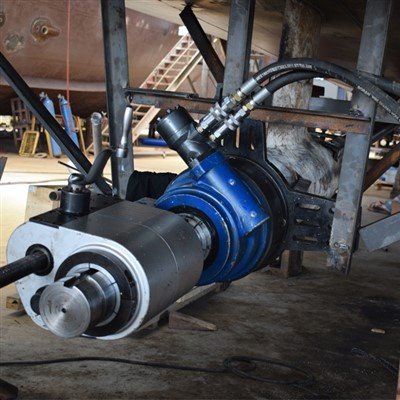
That’s why I decided to sit down and break this down straight. I’m not here to regurgitate textbook definitions that make your eyes glaze over. This is stuff I’ve seen get used in construction yards, mining sites, and even backyard demo jobs—real-world stuff that actually matters when you’re picking a drill that won’t quit on you mid-project. Let’s dive in.
First off, let’s start with the basics: hydraulic drills run on pressurized hydraulic fluid, right? That’s their superpower—they pack way more torque and force than electric drills, and they don’t need a big power cable trailing behind them everywhere. No more tripping over wires on a job site. But even with that, not all hydraulic drills are built the same. They’re tailored for totally different jobs, so if you grab the wrong one, you’re either going to take twice as long or break something. I’ve seen a contractor show up with a tiny handheld drill for a 10-foot deep rock hole and wonder why it died in 10 minutes. Don’t be that guy.
Let’s start with the most common one you’ll probably run into: handheld hydraulic drills. Yeah, they’re the ones you see laborers hoisting around, usually for smaller, on-the-spot jobs. These aren’t your 18V cordless drills you buy at Home Depot—they’re way beefier. I’m talking 500 to 1,200 psi of hydraulic pressure, enough to drill 6 inches deep into concrete or 12 inches into soft rock. The best part about handheld ones is their portability. You don’t need a whole rig to move them from spot to spot. I had a regular customer who does utility line repairs—he’d use his handheld to drill holes for the new water line ties, and he could toss it in the bed of his truck with his toolbox. No hassle. That said, they’re not for heavy-duty work. If you’re drilling 50-foot deep holes in granite? This thing’s gonna peter out. You’ll be sweating way more than you need to.
Next up, and probably the workhorse of the industry, are hydraulic rotary drills. These are the big boys. They use rotational force to spin a drill bit, perfect for drilling deep, large-diameter holes in everything from soil to solid rock. I’ve seen these things on mining sites drilling 300-foot holes for blast holes, and on foundation jobs drilling 2-foot wide holes for concrete piers. The cool thing about rotary drills is you can switch out bits and add different attachments to adjust for different materials. Need to drill through sand? Swap in a auger bit. Need to go through hard rock? Grab a diamond-tipped core bit. The only downside here? They usually need a dedicated rig—like a mounted unit on a truck, or a tracked rig you drive around the site. You’re not tossing this in a pickup bed, trust me. I once helped a customer move a 15,000-pound rotary drill from one job site to another and we needed a flatbed truck and a crane. Not exactly a “grab and go” tool.
Then there’s hydraulic percussion drills—wait, hold on, don’t sleep on these. These are different from rotary drills because they don’t just spin the bit; they also hammer it up and down, like a jackhammer combined with a drill. That makes them perfect for super hard materials that would make a rotary drill stall. I’m talking granite, basalt, even reinforced concrete with rebar. If you’ve ever tried to drill through a sidewalk to put a fence post in and your cordless drill just stopped dead? That’s because it’s not percussion-ready. Hydraulic percussion drills fix that. You can get handheld versions of these too, but the big ones are mounted on rigs for drilling blast holes or anchoring bolts in mining. I’ve used a percussion drill to drill through a 1-foot thick concrete wall in 10 minutes—something that would’ve taken a rotary drill hours. Worth every penny if you’re dealing with dense stuff.
Wait, there’s a specialty type I don’t see talked about enough: hydraulic core drills. These are for when you don’t just want a hole—you want a perfect, cylindrical sample of the material you’re drilling through. Like, if you’re doing structural testing and you need to check the thickness of concrete in an old building, or test soil for mineral content, that’s a core drill. They use hollow bits that cut a cylinder, so you pull out a neat sample instead of a pile of rubble. Hydraulic core drills are way more powerful than electric ones, so you can drill through 2 feet of reinforced concrete no problem. A lot of people mix these up with regular rotary drills, but they’re totally different. I had a geotech customer who swears by his hydraulic core drills—he’s drilled thousands of soil samples for construction projects, and he says he can get a 6-inch sample that’s totally intact every time. That kind of precision matters when you’re designing a building that’s gonna stand for 50 years.
Oh, and let’s not forget about underground hydraulic drills. These are built specifically for tight, dark spaces—mines, tunnel projects, utility tunnels. They’re smaller, more compact, and can navigate narrow passages that regular rigs can’t. Some are even remote-controlled so workers don’t have to be right next to them in dangerous environments. I had a customer doing a subway expansion a few years back—they couldn’t get a big rotary drill down the access shaft, so they used a compact underground hydraulic drill that fit through a 3-foot wide opening. Saved them months of work and a ton of money on custom rigging. These also have extra safety features, like dust extraction and fire suppression, which is non-negotiable in underground spaces.
Wait, let’s talk about what matters when picking one, not just the type. A lot of guys will grab the cheapest drill they can find, only to regret it. Let’s be real—you get what you pay for. If you’re drilling small holes, a handheld is fine, but if you’re going deep, you need a rotary or percussion. And don’t forget about the power source—some drills run off a separate hydraulic power unit (HPU), others are mounted on excavators or backhoes, so you can use the machine’s existing hydraulic system. That’s a big plus if you already have heavy equipment on site, no need to buy a whole separate power unit.
I’ve been in this long enough to see mistakes. I once had a customer bring back a $8,000 rotary drill because he tried to use it to drill through bedrock for a fence. It stalled after 2 feet, and he was pissed. Turns out he needed a percussion drill. That’s the kind of mistake that costs you time and money, so doing your homework on what type you need is key.
At the end of the day, all these hydraulic drills have one job: to make your work easier, faster, and more efficient. I’ve seen these things turn a job that would’ve taken a week into a two-day gig, and that’s why I love them. If you’re not sure which one you need, that’s what I’m here for. I don’t just sell drills— I’ve used them all, I’ve fixed them, I’ve seen what works and what doesn’t. Whether you’re a small contractor doing residential work, a mining company drilling blast holes, or a geotech needing core samples, I can help you find the right one for your job.

Don’t guess. Don’t waste your time and money on the wrong drill. Hit me up to chat about your project, and we’ll figure out exactly what you need. No pushy sales talk, no confusing jargon—just straight answers from someone who actually knows this stuff inside and out. Let’s get your project moving.
Hydraulic Drill References
- Hydraulic Drill Types and Applications, Construction Equipment Guide, 2022
- Mining Hydraulic Drill Standards, International Society of Mine Safety, 2021
- Core Drilling Technology for Civil Engineering, American Society of Civil Engineers, 2020
- Portable Hydraulic Drill Performance, Journal of Construction Machinery, 2019
Shangqiu JDA Machinery Technology Co., Ltd.
With abundant experience, we are one of the most professional hydraulic drill manufacturers and suppliers in China. We warmly welcome you to buy cheap hydraulic drill for sale here from our factory. Quality products and reasonable price are available.
Address: No. 55 Pingyuan Middle Road, Liangyuan District, Shangqiu, Henan, China
E-mail: sales@jdamachines.com
WebSite: https://www.jdamachines.com/
