If you’ve ever stood in a hardware store, staring at shelves of level sensors and wondering which one’s actually going to work for your tank, silo, or industrial process, you’re not alone. I’m the owner of a small, specialty level sensor supply company—we’ve been serving manufacturers, agriculture operations, and chemical processing plants across the Midwest for 12 years, and more times than I can count, I’ve heard this question: How do capacitive level sensors actually work? They’re one of the most popular sensors we stock, but a lot of folks buy them because a colleague recommended them, not because they understand how they turn a raw measurement into actionable data. Let’s break this down, no jargon, no corporate fluff—just the real, practical story behind how these workhorses do their job. Level Sensor
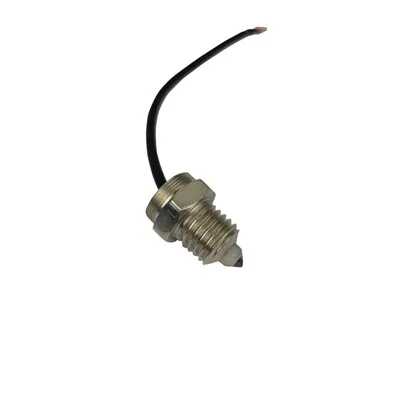
First, let’s start with what a capacitive level sensor is, at its core. Capacitance is a property of every pair of conductive materials separated by an insulator, right? It’s basically the ability of those two materials to store an electrical charge. If you’ve ever charged a balloon by rubbing it on your hair, that’s a tiny example of capacitance at work. For level sensing, we expand that basic principle to fit a tank, which is usually made of metal—conductive, perfect for this.
Most capacitive level sensors we supply are two-part: a probe (the part that sticks down into your tank) and the electronics housing that sits on top of the tank or just outside it. Here’s where the magic starts. When the tank is empty, the probe is surrounded only by air. Air is a really good insulator—its dielectric constant (that’s just a fancy word for how well a material blocks electric charge) is almost 1.0. The tank itself, since it’s metal, acts as the other conductive plate of the capacitor. So when the tank is empty, the capacitance is low, because the only thing separating the probe (one plate) and the tank wall (the other plate) is air.
Now, when you fill the tank up, the liquid or solid inside touches or covers part of the probe. That material has a much higher dielectric constant than air. Water, for example, has a dielectric constant around 80—way higher than air. Even things like grain, fertilizer, or lubricating oil have dielectric constants that are noticeably higher than air. So when that material covers the probe, the dielectric between the two plates changes, which makes the total capacitance of the sensor go up. The electronics housing picks up this change in capacitance, calibrates it to your tank’s specific size and material, and outputs a signal—like a 4-20mA current signal or a digital reading—that tells you exactly how full your tank is.
Wait, hold on—this is where a lot of people get tripped up, and where bad sensor choices go wrong. It’s not just any capacitance change. The key here is that we’re measuring the difference between empty and full, not absolute capacitance. But that’s also why you have to calibrate the sensor to your specific application, which is something we walk every customer through when they order from us. If you put a capacitive sensor in a tank that holds dry grain, for example, the dielectric constant of grain is lower than water, so you have to adjust the sensor’s calibration to account for that—otherwise, it’ll read the tank as half full when it’s actually three-quarters full.
Another thing people don’t always realize: capacitive level sensors work for liquids AND solids. That’s a big reason they’re so versatile. I’ve sold them to corn ethanol plants measuring fermented mash, to feedlots monitoring grain storage bins, to companies that store industrial detergents in plastic tanks. For non-conductive solids or liquids, the same principle applies—they just have a different dielectric constant, so the change in capacitance is different. For conductive liquids, it’s a tiny bit different, but still based on the same core capacitance rule. If the liquid is conductive, like salt water, the probe usually needs a thin insulating coating on it. Why? Because if the liquid touches the probe directly, it would act like part of the probe itself, so the capacitance would stop changing once the liquid is above the coated part. That coating is usually made of PTFE or another hard, chemical-resistant plastic, and it’s something we stock as a standard option for our sensors—no extra wait time, no hassle.
Now, let’s talk about what makes a good capacitive level sensor vs. a cheap one, because that’s a question every customer asks me. A lot of big box supply houses sell generic capacitive sensors that work okay for a backyard water tank, but die after a year or two in industrial use. The difference is in the electronics and the probe. Our sensors use digital signal processing (DSP) that filters out noise—things like vibration from a farm’s pump, electrical interference from a nearby conveyor belt, or even condensation inside the tank. That noise would make a cheap sensor flicker, reading empty when it’s full and vice versa, but our DSP takes thousands of tiny capacitance readings every second, weeds out the noise, and gives you a stable, accurate number. We also use probes made of 316L stainless steel, which is resistant to corrosion from most acids, bases, and agricultural chemicals. You don’t have to replace them every time you switch out a batch of liquid or solid in your tank—just wipe the probe off, and you’re good to go.
Wait, let’s address the most common misconception I get: “Do capacitive level sensors work in pressurized tanks?” The short answer is yes, as long as you specify the right housing rating. We supply sensors rated for working pressures up to 150 PSI, which covers most industrial and agricultural pressurized storage tanks. The probe is sealed inside the tank with a gland or a flange, so pressure doesn’t affect the electronics, as long as it’s installed correctly. We walk customers through installation step-by-step over the phone, no video call required—if you can read a tape measure and use a wrench, you can put one of our sensors in.
Another myth: “They’re not accurate.” For most applications, capacitive level sensors are accurate to within 1% of the tank’s total capacity. That’s way more accurate than a float switch, which can get stuck if there’s sediment in the tank, or an ultrasonic sensor, which doesn’t work well in dusty environments. I’ve had a customer who switched from ultrasonic sensors in his grain silos—they’d read wrong during harvest season because of all the dust floating around—and now uses our capacitive sensors, which haven’t given him a wrong reading in three years. He saved $2,000 a year on maintenance and wrong inventory counts.
Let’s talk about the setup process, because that’s what actually makes the sensor work, not just the theory. When you order a capacitive level sensor from us, we’ll ask you three key questions: what material are you storing? What’s the tank size and material? What’s the operating temperature and pressure? Once you give us that, we’ll configure the sensor at our warehouse before it ships. We calibrate it in our test tank with the exact dielectric constant of your material, so when it arrives at your facility, all you have to do is mount it in the tank, run the power and signal lines, and press two buttons to confirm the empty and full points. No complicated programming, no specialist needed—we’ve had customers who are farmers, not engineers, do this on their own in 15 minutes.
Now, what about limitations? No sensor is perfect, and I’m not going to lie to you about that. Capacitive level sensors don’t work well if the material you’re storing has a dielectric constant that’s almost exactly the same as air. For example, some very fine, low-density powders have a dielectric constant that’s so close to air, the capacitance change is too small for the sensor to pick up accurately. In those cases, we’ll recommend a different type of sensor, like a radar one, and we’ll be honest with you about it—we don’t make you buy something that’s not right for your application. We’ve built our business on trust, not pushing products that don’t fit.
Another limitation: buildup on the probe. If your material is sticky, like molasses or wet clay, it can build up on the probe over time, which changes the capacitance and makes the sensor read wrong. But there are solutions for that. We offer probes with a cleaning wiper that runs along the probe every few hours, or a high-frequency signal that shakes the buildup off. Those are standard accessories, and we’ll include them if we know you’re dealing with a sticky material. We also sell spare wipers for a fraction of the cost of a new sensor, so you can do routine maintenance without replacing the whole unit.
Let’s circle back to why capacitive level sensors are still the go-to for so many applications. They’re affordable, versatile, easy to install and maintain, and accurate enough for 95% of the level sensing jobs we see. Compare that to guided wave radar sensors, which are more expensive, or float switches, which are prone to failure in dirty tanks. Capacitive sensors hit that sweet spot between performance and cost, which is why we sell more of them than any other type.
I’ve seen a lot of new sensor companies pop up over the years, selling fancy sensors with long names and high price tags, but when their customers call us complaining that the sensor only lasted six months, we’re the ones they come to. Our capacitive level sensors have an 18-month warranty, and our customer support is actually people, not a call center overseas. If you call us at 2 p.m. on a Tuesday, you’ll talk to someone who’s sold these sensors for years, who can answer your question in two minutes, not make you wait on hold for 20 minutes and then transfer you.
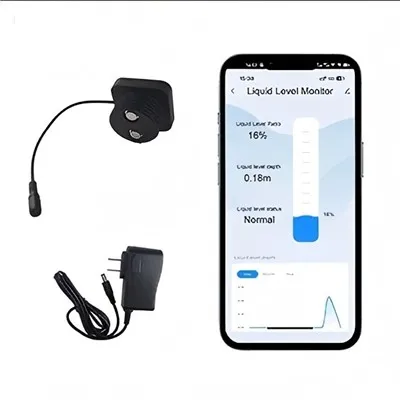
At the end of the day, level sensing is about one thing: knowing what’s in your tank, so you don’t run out of raw material mid-production, or overfill a tank and cause a mess, or waste money by ordering more material than you need. A capacitive level sensor is just a tool to get that information reliably. We’re not here to sell you a sensor that does 10 extra things you don’t need—we’re here to sell you the right sensor for your specific job, at a fair price, with support after the sale.
Float Level Sensor If you’re tired of inaccurate level readings, sensors that break too often, or support that doesn’t answer your calls, we’d love to talk to you. We work with small businesses and large corporations alike, from a 500-gallon water tank at a local auto shop to a 10,000-barrel chemical storage tank for a manufacturing plant. We can help you figure out if a capacitive level sensor is right for you, or recommend another solution if it’s not. Just reach out to us to start a conversation about your level sensing needs.
References
- Fraden, J. (2016). Handbook of Modern Sensors: Physics, Designs, and Applications. Springer.
- National Institute of Standards and Technology. (2008). Dielectric Constant of Common Liquids and Solids. NIST Technical Note.
- Li, Y., & Wang, H. (2020). Advances in Capacitive Level Sensing for Industrial Applications. IEEE Transactions on Industrial Electronics.
Shenzhen Fineherc Technology Co., Ltd.
As one of the most experienced level sensor suppliers in China, we’re featured by quality products and low price. Please feel free to buy discount level sensor made in China here from our factory. Welcome to view our website for more information.
Address: 5th Floor, Building D, No. 39, Keji East Road, Torch Development Zone, Zhongshan City,China
E-mail: fineherc@hotmail.com
WebSite: https://www.fineherc.com/
