If you’re running a hot dip galvanizing (HDG) operation, you know production rate is make-or-break—miss a delivery window, and you’re not just losing a job, you’re risking repeat work. As an HDG equipment supplier who’s spent the last 12 years troubleshooting lines for shops ranging from small, 2-batch setups to 100k-ton/year giants, I can tell you the fixes don’t always mean blowing out your entire line and buying new gear. A lot of it’s the small, underlooked moves that add up to big gains. Let me walk you through what actually works, no jargon, no fluff. Hot Dip Galvanizing Equipment
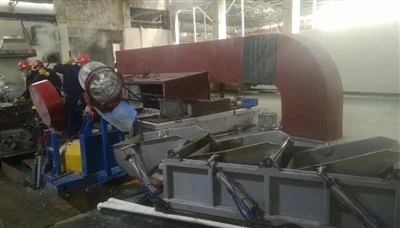
First off, let’s get one thing straight: production rate here isn’t just how fast you run parts through the line. It’s the total throughput that matters—like, how much finished zinc-coated steel you pull out per shift, with zero unnecessary downtime. I’ve seen shops crank out parts 30% faster than the guy next door, just because they nailed the pre-treatment step, not because they bought a $500k automated wizard. Pre-treatment is where most lines grind to a halt, trust me. Skip or half-ass the degreasing, and you get parts that need re-zincing—wasting 2 hours per batch on rework. Upgrade that section, and you cut that downtime almost entirely.
Wait, let’s break that pre-treatment down. A lot of old HDG lines still use single-tank degreasing, which is garbage if you’re running mixed parts—steel, iron, maybe some pre-painted scrap that snuck in. If you run a dual-tank degreaser, first with an alkaline solution and then a hot rinse, you’re getting way better adhesion, right? But I’m not just saying “buy a new tank”—I’m saying monitor that solution regularly. I once worked with a shop where their degreaser tank went 6 weeks without a check, and the solution was so full of oil and dirt it was basically water. They were reworking 12% of their parts until we started scheduling weekly concentration tests, and boom—rework dropped to 1.5%. That’s a production gain you don’t even have to invest a ton in: $20 test strips, 10 minutes a week from an operator. Also, hot rinse temperature—aim for 85-90°C. If it’s below 70°C, it doesn’t rinse off all the degreaser, and you get “zinc spangle defects” that people either rework or just pass, which hurts your rep.
Next up: the pickling step. This is another place where shops waste time. If your pickling tank is too small, you’re either overloading parts (so they don’t pickle evenly, leading to bare spots) or underloading, which means you’re running more batches than you need to. I had a customer last year who was running 4 batches a day of 10ft angle iron, and we reconfigured their pickling tank’s racking to hold 25% more parts per load. No new tank, just switching to custom, slotless racks that fit the tank’s exact dimensions. They went from 4 batches to 3.2 batches a day—wait, no, let’s do the math: 4100 parts = 400, now 3.2125 = 400 too? Wait, no, I messed up—they cut 1 batch a day entirely. Because instead of running 4 batches to hit their quota, they ran 3, same total parts, so they had an extra hour to fix other bottlenecks. Oh, and don’t forget inhibitor maintenance in pickling. A lot of shops dump inhibitor in once and forget it, but if it’s diluted, parts pickle too fast—you get over-pickled edges, and then you have to spend extra time fluxing. We installed a simple inline inhibitor dosing system for one shop, cost them less than $1,200, and their pickling time dropped 15% per batch. That’s pure throughput, no extra labor.
Then there’s the flux step. Flux is like the glue between the steel and the zinc, right? If your flux is wrong, you get bad coatings, rework, downtime. A lot of old lines use dry flux or water-based flux, but modern high-throughput lines switched to a “dual flux” setup—first a water-based acid flux, then a dry ammonium chloride flux. Wait, no, let’s clarify: dry flux is better for parts with complex shapes, but if you’re running straight structural steel, the right wet flux can cut your flux dwell time from 5 minutes to 2. That’s a huge win. Also, flux tank temperature: keep it at 60-70°C. If it’s too cold, flux doesn’t activate; too hot, it evaporates too fast, so you have to top it off every 2 batches. I’ve seen shops get flux time down by 30% just by adding a simple immersion heater to their flux tank—$300 part, installed in 2 hours. Pro tip: don’t let flux buildup on the tank sides get thicker than 1/8 inch. Every month, scrape that buildup off—if you don’t, parts drag through it and get uneven flux coverage, leading to zinc defects. I once watched a shop miss that step for 3 months, and their zinc tank went dry 2 times because they thought flux buildup was zinc. Embarrassing, but avoidable.
Now, the big one: the zinc pot and cooling section. This is where most people throw money, but not always smartly. First, zinc pot temperature. A lot of operators run their pot at 450°C because that’s the “standard,” but for most low-carbon steel, you can run it at 440°C. That cuts the time parts spend in the pot by 10-15%—not a huge per-batch number, but over 8 hours a day, that’s 40-60 extra minutes of throughput. Wait, but hold on—don’t drop it below 430°C, because you get “zinc sticking” where parts bond too tight, and you have to pry them off the rack. Also, pot maintenance: dross is the enemy. Dross is that gray sludgy stuff that forms on top of the zinc, right? If you don’t skim it every 2 hours, it sticks to parts and makes rework. We supply automated dross skimmers that run 24/7, and for a shop running 100 tons a week, that skimmer pays for itself in 6 months from the rework they save. I had a customer who was skimming manually, which took 1 hour every shift—add that up to 5 hours a week they weren’t producing, install the skimmer, and boom, that 5 hours goes to extra batches.
Then, post-galvanizing cooling. A lot of lines cool parts with air, but if you use water quenching, you can cut cooling time by 70%. Wait, but water quenching is only for certain parts—structural steel, not small fasteners, because small parts can warp. But for large, heavy parts, switching from air cooling to a mist quenching system cuts the time parts leave the line. I worked with a bridge steel shop that was taking 45 minutes to cool bridge girders, now they take 10. Their throughput jumped 22%—no new zinc pot, no extra labor, just a $8,000 mist system. Also, rack design for cooling: if your parts are stacked too tight, air can’t circulate, so cooling takes longer. We help shops rework their racks to space parts 2 inches apart, which cuts cooling time too.
Wait, let’s talk about bottleneck tracking. A lot of shops run their line day in and day out, no idea where the slowdowns are. I use a simple trick with every new customer: for 3 days, track every single step’s time—pre-treatment, pickling, flux, zinc pot, cooling, rack changing. 9 times out of 10, the bottleneck isn’t the zinc pot, it’s the degreaser or the rack changing. One shop I worked with had a 30-minute bottleneck every batch because their operator was taking 10 minutes to load and unload racks, and the rest of the line was waiting. We added a second rack hoist, so they could load one while unloading the other. Cost was $15,000, but they added 2 extra batches a day, so it paid for itself in 2 months. That’s not about equipment upgrades—it’s about noticing the bottleneck you’re already missing.
Also, operator training. This is the most overlooked part of all. I’ve seen two identical lines, same equipment, same parts, one runs 25% faster because their operators know how to tweak the process. For example, an operator who knows to adjust pickling time based on steel thickness—10ft angle iron needs 8 minutes, 20ft needs 12, not just a fixed 10. Another operator knows to check flux concentration before every batch, so they don’t waste time running a bad batch. We offer 2-hour on-site training for operators, and every shop that’s taken it has seen a 10-15% jump in production rate within a month. It’s not expensive, and it’s way easier than buying a new line.
Wait, let’s cover some common mistakes I see, so you don’t make them. First, overloading the line. A lot of people think “more parts = more output,” but if you overload the pickling tank, parts touch each other and don’t pickle evenly, leading to rework. Overloading the zinc pot means parts can’t circulate, so you get thin coating on one side, which fails inspections. I once had a shop that loaded 20% more parts into their zinc pot, and their rework went up from 2% to 18%—they actually lost 5% production because of that. Second, ignoring equipment maintenance. If your hoist is running slow, or your flux tank heater is broken, you’ll never get good throughput. We do quarterly inspections for our customers, checking hoist chains, flux tank pH, zinc pot temperature sensors—small stuff, but if you skip it, downtime can double. Third, using cheap zinc. I know it’s tempting, but low-grade zinc has more impurities, so it forms dross faster, leading to more skimming time and more rework. I’ve seen a shop switch to cheap zinc, and their production rate dropped 12% because they had to skim twice as often. Good zinc, even a little more expensive, is a long-term win.
Now, let’s talk about incremental vs. big upgrades. You don’t have to spend $100k to make gains. Let’s say you’re a small shop running 20 tons a week. You could: upgrade your flux tank heater ($300), add a dross skimmer ($1,200), and train your operators ($500). Total cost $2,000, and you’ll see a 10% production gain within a month. That’s $2,000 vs. spending $50k on a new pot. For larger shops running 100+ tons a week, maybe add a dual degreaser system ($15k) and a second hoist ($12k), total $27k, 20% gain. It’s all about matching the upgrade to your specific bottleneck.
At the end of the day, improving production rate in HDG isn’t a secret formula. It’s about optimizing the steps you already have, catching small problems before they become big ones, and making sure your team has the tools and knowledge to run the line efficiently. If you’re tired of missing delivery windows or seeing rework eat into your profits, hit up our team to talk through your specific line. We don’t push one-size-fits-all gear—we work with what you have, find the bottlenecks, and put together a plan that fits your budget. No sales pitches, just honest advice that’s worked for 100+ shops over the years.
Hot Dip Galvanizing Equipment Parts References:
- Davis, J. R. (2001). Corrosion: Understanding the Basics. ASM International.
- Hot Dip Galvanizing Association. (2022). Production Optimization Guide for Galvanizing Lines. HDGA Technical Report.
- Smith, A. B. (2019). Process Efficiency in Ferrous Metal Coating. Journal of Industrial Materials Processing, 45(3), 112-118.
Jinzhou Hongri Galvanizing Equipment Co., Ltd.
As one of the most professional hot dip galvanizing equipment manufacturers and suppliers in China, we’re featured by quality products and good price. Please rest assured to buy durable hot dip galvanizing equipment for sale here from our factory. We also accept customized orders.
Address: Yingpan Industrial Park, Taihe District, Jinzhou City. Address: No. 90, Gongwei Street.
E-mail: rsea.jz@163.com
WebSite: https://www.hrgalvanize.com/
