If you’ve been riding an e-bike for a while, chances are you’ve stared at your stock battery and wondered: “Could I get more range, faster speeds, or better performance by upgrading to a higher-voltage pack?” One of the most common questions our team gets at the electric bicycle battery supply is, “Can I upgrade my e-bike battery from 36V to 48V?” The short answer is: it can work, but it’s not as simple as swapping out one battery for another. As someone who’s worked with e-bike batteries for over seven years, I’ve seen riders make the wrong upgrades that fried their controllers, destroyed their motors, or even turned a fun weekend ride into a safety hazard. Today, I’m breaking down everything you need to know to make this upgrade the right way—from the science of voltage to the critical checks that keep your bike running safely. Electric Bicycle Battery
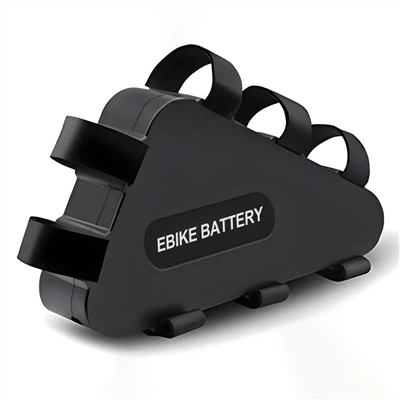
First, let’s get the basics straight: voltage is the measure of electrical potential that pushes current (amperage) through your bike’s system. A 36V e-bike has a nominal voltage of ~36V (realistically, a fully charged 36V Li-ion pack hits around 42V when full, and drops to ~30V when empty). A 48V pack has a nominal voltage of 48V, with a full charge around 54.6V and a cut-off around 40V. Why would you want this upgrade? For most riders, it comes down to two big benefits: more power and longer range. If your 36V bike is limited to a top speed of 20 mph (common for Class 2 e-bikes), a 48V pack can push that to 25 mph or higher—if your motor is rated to handle it. Range, too, gets a boost because higher voltage means your battery can store more usable energy in the same (or similar) physical space. A 10Ah 36V battery has ~360Wh of capacity; a 10Ah 48V pack has 480Wh, so you can ride 20-50% farther on a single charge, depending on your motor’s efficiency and your riding style.
That said, the biggest mistake riders make is assuming all 36V bikes can handle a 48V upgrade. The truth is, your e-bike’s controller and motor are designed to work within a very specific voltage window, and jumping from 36V to 48V is a big jump—nominal voltage goes up by 33%. Let’s talk about the controller first. The controller is the brain of your e-bike: it regulates how much power flows from the battery to the motor, manages throttle and pedal assist signals, and includes a protection circuit to prevent overcharging, over-discharging, and overheating. Most stock 36V controllers are rated for a maximum input voltage of around 42V—exactly the full-charge voltage of a 36V Li-ion pack. A fully charged 48V pack hits 54.6V, which is 12.6V above the controller’s rated maximum. Connect that directly, and you’re almost guaranteed to blow out MOSFETs (the tiny switches that control power flow), burn out wiring, or even trigger a fire hazard if the wiring can’t handle the excess current. That’s why, if you want to upgrade to 48V, your first stop should be checking your controller’s voltage rating. If it’s a 36V controller with a max input of 42V, it’s not compatible. If you can find a controller that’s rated for 48V (with a cut-off that matches your new battery’s 40V minimum and max charge of 54.6V), that’s a non-negotiable part of the upgrade.
Next up: your motor. Most hub motors (the most common type on budget and mid-range e-bikes) are brushless DC (BLDC) motors, which are categorized by their “Kv” rating—kilovolts per rotation, or how many RPM the motor turns per volt of input. A 36V motor might have a Kv of 27, meaning at full charge (42V), it turns at ~1,134 RPM. If you connect a 48V pack directly, that same motor will turn at ~1,228 RPM at full charge, but that’s not the only problem. Motor windings are designed for a specific voltage: a 36V motor has thinner windings that are rated for 36V, so running 48V through them increases heat dramatically. Over time, that heat can wear down the insulation on the windings, leading to short circuits or total motor failure. Some high-quality mid-drive motors (like Bosch Performance Line or Shimano Steps) are actually rated for voltage ranges that can include 48V—if yours is, you’re in a better position. But even if your motor is rated for 48V, you still need to make sure the current (amps) your new 48V battery can supply matches what your motor needs. A 500W 36V motor draws ~13.8 amps at full power; a 500W 48V motor draws ~10.4 amps, so that’s a better fit, but a 1000W 36V motor draws ~27.8 amps, and a 1000W 48V motor draws ~20.8 amps—still, make sure your battery can deliver the peak current your motor requires.
Now, let’s talk about battery compatibility, because not all 48V packs are the same. First, you need a battery that fits your bike’s frame. Some e-bikes have integrated batteries that fit into a down tube, seat tube, or rear rack, so you can’t just buy a random 48V pack—you need one that matches the dimensions of your stock battery. Second, the connector has to match. Most e-bikes use either a XT60, a 3-pin round connector, or a custom connector specific to your brand. If you buy a 48V battery with the wrong connector, you’ll need an adapter, but adapters can introduce voltage drops and safety risks if they’re not properly insulated and rated for the current your pack draws. Third, the battery’s voltage management system (BMS, or Battery Management System) has to be compatible with your bike. The BMS is the safety core of the battery: it balances individual cells to make sure they don’t overcharge or over-discharge, and it cuts power if there’s a short or overheating. A 48V BMS is different from a 36V BMS, so if you’re sourcing a new battery, make sure it has a BMS rated for 48V with the correct low-voltage cut-off (around 40V, to match your controller) and overcharge protection (around 54.6V).
Wait a second—what about if your e-bike is a low-power model, like a 250W Class 1 e-bike? The rule still applies: check your controller first. If your controller is rated for 36V only, upgrading to 48V without replacing it is a bad idea. That’s why as a battery supplier, we always recommend that riders start with a full system check before purchasing a 48V upgrade. We once had a customer come to us with a 2019 Trek Domane+ e-bike that he wanted to upgrade from 36V to 48V. He thought it was just a battery swap, but when we checked, his stock controller was a 36V unit with a max input of 42V. We pointed him to a compatible 48V controller that worked with his Bosch mid-drive motor, and he ended up buying both the new controller and a 10Ah 48V battery. He told us later that he got a 30% boost in top speed and 25% more range, and he hasn’t had any issues in two years of riding. On the flip side, we had another customer who tried to skip the controller upgrade on a $1,200 e-bike, and after one 10-mile ride, his controller blew out and his motor stopped working. He had to pay $500 to replace both, plus he lost the battery he’d fried because he used a 48V pack on a 36V system.
Another common question: can I modify my stock 36V battery to be 48V? The short answer is no, unless you’re a trained battery technician. Most stock 36V e-bike batteries are made with 10 lithium-ion cells arranged in a 10S1P configuration (10 cells in series, 1 parallel), each with a nominal voltage of 3.6V, adding up to 36V. To make a 48V pack, you need 13 cells in series (13S), which would require completely rewiring the pack, replacing the BMS, and adjusting the wiring to handle the higher voltage. Doing this at home without proper training is extremely dangerous: lithium-ion cells can catch fire or explode if wired incorrectly, and the BMS won’t balance the new cells, leading to uneven wear and early failure. That’s why we never recommend modifying stock batteries—buying a purpose-built 48V battery that’s tested for your bike is the only safe route.
What about legal stuff? A lot of riders don’t realize that upgrading your e-bike’s voltage can change its classification, which affects whether you can ride it on public roads. In the US, Class 1 e-bikes are limited to 20 mph with pedal assist, Class 2 are limited to 20 mph with throttle, and Class 3 are limited to 28 mph. If you upgrade your motor and battery to push your e-bike above 20 mph (or 28 mph for Class 3), you might need to register it as a moped or motorcycle in some states, and you’ll lose access to bike lanes in many areas. In Europe, e-bike laws also tie maximum speed to motor power and voltage, so a 48V 500W motor might not be classified as an e-bike in countries like Germany, requiring you to have a license and insurance. Before upgrading, check your local e-bike regulations to make sure your modification is legal.
Let’s also talk about cost, because a 48V upgrade isn’t just a $300 battery swap. A compatible 48V battery for a mid-range e-bike costs between $350 and $600, depending on capacity (10Ah is around $350, 20Ah is around $550). If you need to replace your controller, that’s another $80 to $150, and if your motor isn’t rated for 48V, you might need a new motor too, which can add $200 to $500. For many riders, that total cost is worth it for the extra range and power, but it’s not a cheap upgrade. We see a lot of riders who come to us with a $150 stock 36V battery, and they expect a $200 48V upgrade—we have to explain that the real cost is higher, because of the system components.
Now, how do you know if a 48V upgrade is right for you? Ask yourself these three questions: 1) Is my e-bike’s controller and motor rated for 48V? If not, am I willing to replace those parts? 2) Do I have the space in my frame or rear rack for a 48V battery of the same or similar capacity as my stock 36V pack? 3) Am I okay with the legal and safety implications of a higher-voltage upgrade? If you answered yes to all three, then a 48V upgrade is a great choice. If you answered no to any, you might be better off sticking with a higher-capacity 36V battery for more range, or upgrading your motor’s power within your existing voltage instead.
At our electric bicycle battery supply, we test every 48V pack before it leaves our warehouse to make sure it’s compatible with a wide range of e-bike models, and we work with customers to help them check their controller and motor ratings before they buy. We’ve had riders come to us worried that their 20 mph e-bike will turn into a speedster that’s too fast for their local trails, and we help them pick a 48V pack with a BMS that’s calibrated to work with their stock parts, so they get the extra range without the unnecessary speed boost. We also prioritize safety: all our batteries are UL 2271 certified, which is the standard for e-bike batteries in the US, so you don’t have to worry about overheating or fire risks.

If you’re ready to explore a 48V upgrade for your e-bike, we’re here to help. Whether you need to confirm compatibility, pick the right battery for your bike’s dimensions, or ask about controller options, our team can walk you through every step. Don’t risk damaging your e-bike or compromising safety by making an unplanned upgrade—reach out to us to discuss your needs and find the right solution for your ride.
Customized Ebike Battery References
- U.S. Consumer Product Safety Commission. 2022. “E-Bike Battery Safety: What You Need to Know.”
- Electric Vehicle Association. 2021. “E-Bike Voltage Compatibility Guide for Controllers and Motors.”
- European Cyclists’ Federation. 2023. “E-Bike Classification and Regulation Across EU Member States.”
- Underwriters Laboratories. 2020. “UL 2271 Standard for Lithium-Ion Batteries for Light Electric Vehicles.”
- Journal of Power Sources. 2019. “Performance Analysis of Voltage Upgrades for Low-Power Brushless DC Motors in E-Bikes.”
General Electronics Technology Co., Ltd.
General Electronics Technology Co., Ltd. is one of the most professional electric bicycle battery manufacturers and suppliers in China, featured by quality products and good price. Please rest assured to buy electric bicycle battery made in China here and get pricelist from our factory. Also, customized service and OEM&ODM service are available.
Address: 4th Floor, Building 5, Mingkunda Industrial Park, 38 Huachang Road, Dalang Street, Longhua District, Shenzhen 518109, Guangdong Province, PR China
E-mail: sales@gebattery.co
WebSite: https://www.gebbattery.com/
