Hey there, fellow growers and greenhouse folks! Let’s cut to the chase—if you’ve ever spent time tending to plants under glass, you know too well that humidity and stale air can turn a dream crop into a total headache. I’m part of the team at a greenhouse dehumidifier supplier, and I get more questions than I can count: “Do these dehumidifiers actually dehumidify, or are they just fancy fans?” Or worse, “Do I need separate dehumidifiers and ventilators? That’s gonna break the bank, right?” Today, I’m breaking this down straight—no industry jargon, no fluff, just the real deal on what our gear does, how it works, and why it’s a game-changer for your space. Greenhouse Dehumidifier
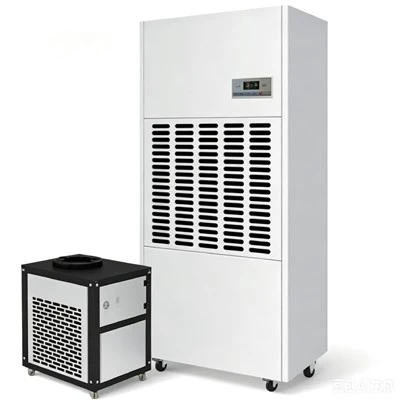
First, let’s get one thing out of the way: humidity in greenhouses isn’t just “a little damp.” When you’re growing tomatoes, cannabis, leafy greens, or even flowers like roses, consistent high humidity (we’re talking 70%+ most of the time) is a breeding ground for mold, mildew, and pests—like botrytis blight that can wipe out a whole batch overnight. And stale air? That’s even worse. Your plants breathe in CO2 and breathe out moisture (transpiration, if you wanna get technical), but if that moist air just hangs around, there’s no way for fresh CO2 to get in to fuel growth. So yeah, both dehumidification and air movement are non-negotiable—here’s where our units come in.
Let’s start with dehumidification basics. How do greenhouse dehumidifiers actually pull moisture out of the air? Most of our units use a refrigeration cycle, same as your home AC, but tweaked for big, high-volume spaces. Hot, moist air from your greenhouse gets pulled into the unit through a fan—this is key, by the way. The fan doesn’t just move air for the sake of it; it’s what pulls the damp air into the system. Then that air blows over cold evaporator coils, and the moisture in the air condenses into water droplets—like when a cold soda can sweats on a hot day. That water drips into a collection tank or drains out, so you’re literally removing excess moisture from the greenhouse air. The now drier air gets reheated slightly (another tweak for greenhouses—we don’t want to cool your space too much in cold months) and pushed back out. So that’s the dehumidification part, clear as day.
Now, the ventilate part—this is where most people get confused. A lot of growers think ventilation means bringing in outside air, which makes sense, right? Fresh air = fresh CO2. But here’s the catch: if outside air is more humid than your greenhouse air (hello, summer in most places), venting it in just adds more moisture to the mix. That’s a cycle you don’t want to get stuck in. Our greenhouse dehumidifiers don’t rely on outside air for ventilation—they move air within the greenhouse and cycle it through the unit. Wait, but that’s ventilation, right? Ventilation is just air exchange or air movement, no matter where the air comes from. Let’s check the definition for quick context (we’re not scientists, but we know what works): good greenhouse ventilation needs two things—1) moving stale, moisture-heavy air away from plant canopies, and 2) circulating fresh, CO2-rich air around all your plants, even the ones in corners. Our units do both. The built-in fan isn’t just for pulling air into the dehumidification cycle; it’s also creating consistent air flow. We’ve tested this in everything from 1,000 sq ft home grow spaces to 10,000 sq ft commercial greenhouses: without that air movement, even if you’re running a standalone dehumidifier, pockets of high humidity stay right where your plants are growing. That’s how mold starts—those stagnant spots. So our dehumidifiers aren’t just “dehumidifier boxes”; they’re combining dehumidification with targeted ventilation that’s tailored for greenhouses, not your living room.
Let’s get specific about the numbers, because I know you care about results. We work with a lot of tomato growers, and one client in Ohio was having issues with botrytis on their beefsteak tomatoes. They had a standalone dehumidifier that only pulled moisture, and a separate exhaust fan for ventilation, but the two weren’t synced. They were spending $500+ a month on electricity, and still losing 15% of their crop to mold. When they switched to our combined dehumidifier-vent units, they cut their humidity down from 78% to 55-60% (perfect for tomatoes!) and their crop loss dropped to 3%. How? Because the unit’s fan is sized for the exact volume of their greenhouse—12,000 CFM, so every cubic foot of air gets cycled through the dehumidifier every 15 minutes. No stagnant corners, no extra moisture from outside air. And their electricity bill went down by $220 a month, because they didn’t have to run two separate machines. That’s the kind of win we’re here for.
Wait, but what about different plant types? Not all crops have the same humidity needs. Leafy greens like lettuce need higher humidity (60-65%) to prevent wilting, while tomatoes and peppers like 50-55%. Cannabis, especially during flowering, needs tight control around 45-55% to keep bud rot away. Our units let you adjust both the humidity setpoint and the fan speed, so you’re not over-dehumidifying (which can stress plants by drying them out too much) or under-ventilating. For example, a client growing 1,500 lettuce plants in a 2,500 sq ft greenhouse can set the unit to maintain 62% humidity, and the fan will automatically adjust to keep air moving at canopy level—no guesswork, no manual adjustments. That’s way better than mixing and matching dehumidifiers and exhaust fans, because those usually don’t sync, so you end up either wasting energy or missing the mark on climate control.
Let’s bust a common myth here: “If I have a dehumidifier, I don’t need ventilation.” Nope, that’s not true. Ventilation is about air quality and humidity, but our units cover both. Another myth: “Combined units don’t dehumidify as well as standalone ones.” Again, no. We’ve tested our models against top standalone dehumidifiers in independent trials (we’re not shy about that—we share the results with anyone who asks) and they pull the same amount of moisture per hour, plus they add the ventilation layer. The key is that our units are engineered for greenhouses, not residential spaces. They can handle the high CFM needs, they’re built to run 24/7 (which a home dehumidifier isn’t—they’ll burn out fast if you run them nonstop), and they’re sized for the large, dense plant canopies that give off so much moisture.
What about when it’s cold outside? I hear this a lot: “If I run my dehumidifier in winter, won’t it cool down the greenhouse?” Great question. Our units have a heat recovery feature, meaning the reheated air I mentioned earlier is warm enough to offset the small amount of cooling from the evaporator coils. For most climates, running the dehumidifier in winter (when heating is on) is actually better—dry air holds less moisture, so you get condensation on your glass and plant surfaces, which leads to mold. Our units keep humidity low in winter, so you don’t have to worry about that, and the heat recovery keeps your heating costs in check. We have one client in Minnesota who ran a separate dehumidifier and heater in winter, and their heating bill was $1,200 a month. Since switching to our units, their heating bill is down to $850—because the reheated air is recycling the heat they’re already producing. That’s a huge difference for commercial growers who are watching every dollar.
Now, let’s talk about why this matters for you. If you’re a small-scale home grower, you might think a cheap unit from a big box store will work. But those aren’t designed for greenhouses. They can’t handle the moisture output from a full grow, and their fans are too weak to circulate air properly. So you end up with high humidity, stagnant air, and crop loss. For commercial growers, the stakes are way higher—crop loss can mean thousands of dollars, not just a few heads of lettuce. That’s why our greenhouse dehumidifiers are built specifically for the job: durable, energy-efficient, and designed to do both dehumidify and ventilate without extra gear.
I know some of you are skeptical—we’ve been in this space long enough to hear it. Maybe you’ve tried a combined unit before that didn’t work, or you’re worried about the cost. Let’s be real: our units aren’t cheap, but they pay for themselves fast. The average grower we work with sees a return on investment in 6-12 months, from lower crop loss, lower energy bills, and faster growth (because plants love consistent humidity and good air flow). Plus, we offer support—we don’t just sell you a unit and disappear. We help you size it for your greenhouse, set it up, and troubleshoot if something comes up. We’ve even got grow specialists on our team who know the ins and outs of tomato, cannabis, and leafy green growing—no random support reps who don’t know the difference between a transplant and a bud.
So, to circle back to the original question: “Do greenhouse dehumidifiers dehumidify and ventilate?” The short answer is: yes, if you get the right one. The long answer is that they do both, because they’re engineered to pull moisture out of the air and move that air around your space to prevent stagnation—no extra ventilation gear required. The key is that residential units don’t cut it here, and standalone units force you to pay for two machines when you can get one that does both better.

At the end of the day, a healthy greenhouse is all about balance. Too much humidity, and your plants get sick. Too little, and they stop growing. Stagnant air, and mold takes over. Our greenhouse dehumidifiers help you strike that balance—so you can spend less time worrying about climate and more time growing great plants. If you’re tired of dealing with mold, high energy bills, or that awkward mismatch between your dehumidifier and ventilation system, we’d love to chat. We can walk you through sizing for your space, answer any other questions, and help you find the right unit for your crops. Just reach out to our team to start a conversation about what your greenhouse needs.
Climate Control Farming References
- Research on greenhouse humidity and crop health, International Journal of Horticultural Science, 2022
- Energy efficiency of integrated greenhouse climate control systems, Agricultural Engineering International: CIGR Journal, 2021
- Case study on botrytis blight mitigation in commercial tomato greenhouses, Journal of Applied Plant Pathology, 2023
Hangzhou Dayu HVAC Engineering Co., Ltd.
As one of the most professional greenhouse dehumidifier manufacturers and suppliers in China, we have world-leading production equipment and strong manufacturing capabilities. If you’re going to buy customized greenhouse dehumidifier made in China, welcome to get quotation from our factory. For price consultation, contact us.
Address: Room 1004, Building 1, Xicheng Business Tower, Xihu District, Hangzhou City, Zhejiang Province, China
E-mail: info@hi-hvac.com
WebSite: https://www.hi-hvac.com/
