Hey there! If you’ve ever walked past a workshop where a ventilation fan’s humming away, or stood in a tight crawlspace and felt that quiet push of air toward a vent, chances are you were near a single inlet blower. I’ve been supplying these bad boys for over a decade now, and let me tell you—most folks see ‘em as just “another box with a motor,” but there’s actually a lot going on inside that makes them so useful for everything from drying grain to keeping restaurant kitchens from fogging up. Today, I’m gonna break down how these things work, why they’re different from other blowers, and maybe even clear up a few myths I hear all the time from new customers. Single Inlet Blower
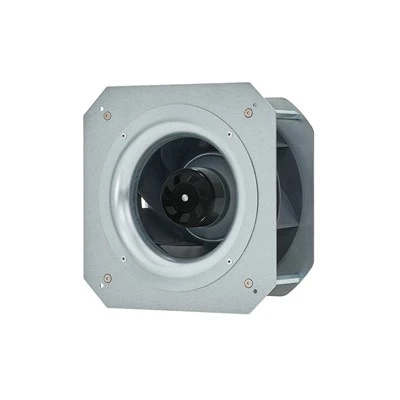
First off, let’s get the basics straight: what is a single inlet blower? Unlike dual inlet blowers that suck air in two sides (those are usually bigger, for high-volume jobs), a single inlet only draws air from one direction. That makes them compact, which is why you’ll spot ’em in small HVAC units, dust collection systems, and even portable drying setups. I’ve had customers tell me they picked a single inlet blower just because it fits in a tight spot where a dual inlet would’ve been too long—totally get that.
Let’s start with the main parts you actually see. On the outside, you’ve got the housing—like a curved, metal shell, usually made of galvanized steel or aluminum for durability. That curve? It’s called a volute, and it’s way more important than it looks. Then there’s the inlet, that one open hole I mentioned, where air gets pulled in. On the inside, there’s the impeller—think of it as a wheel with curved blades, kind of like a small fan, but not flat. And finally, the motor, which is bolted right to the impeller shaft, spinning it at whatever speed you need. No fancy gearboxes here, usually—just direct drive or a simple belt drive, depending on the size.
Now, how does the magic happen? Let’s walk through the step-by-step, like we’re right inside the blower. The second you turn the motor on, it starts spinning the impeller. Those curved blades don’t just push air straight—they’re designed to fling air outward, centrifugal force, right? That’s the key part here. When the impeller spins, it creates a low-pressure zone right at the inlet hole. Air from outside—whether that’s a room full of dust or just ambient air—rushes into that low spot to fill the gap. That’s why only one inlet works here; all the air being pulled in has to come from that single opening, so it’s focused instead of spread out.
Once that air gets into the impeller, the blades yank it and fling it toward the edges of the impeller. As the air moves out, it speeds up—kinetic energy, if we’re being technical. Now, the volute housing comes into play here. The volute isn’t just a random curve; it gets wider as it follows the impeller’s edge. When that fast-moving air hits the volute, the wider space slows it down, and all that kinetic energy turns into pressure. That’s why you get two kinds of air output here: volume (how much air moves) and pressure (how hard it pushes). Single inlet blowers are pretty good at medium pressure—enough to move air through ducts or push it through filters, without being as loud as a heavy-duty industrial blower.
Wait, let’s bust a common myth: people think all blowers move the same air the same way, but single inlet blowers are different from centrifugal fans (the ones with flat blades, usually for low pressure). Single inlet impellers have backward-curved blades, mostly. Those blades are shaped so they’re more efficient at converting that impeller spin into useful pressure, without wasting energy on noise. I’ve seen customers use a regular fan for a drying job and it wouldn’t move the air far enough, but a single inlet blower fixed that right up.
Another thing I get asked a lot: why single vs dual inlet? Let’s say you need to move a lot of air—like 10,000 cubic feet per minute (CFM). A dual inlet blower would pull from two sides, so it’s wider, but a single inlet can hit that same CFM with a smaller footprint. For jobs where space is tight, that’s a game-changer. I had a small construction company reach out last year—they needed a blower for a dust collection system in a cramped job trailer, and a dual inlet just wouldn’t fit. We sent over a single inlet model that’s half the size and works like a charm.
Now, let’s talk about what affects how well a single inlet blower works. First, the impeller size: bigger impeller, more air it can move, obviously. But the blade curve matters too—backward curved blades are quieter and more efficient, forward curved (those are cheaper, usually) move more air but wear out faster, and sometimes can overheat if you run ’em too long. Then there’s the housing: if the volute is too narrow, the air won’t slow down enough, so you get less pressure. If it’s too wide, you waste energy, so it blows hotter and uses more electricity. That’s why we test every single blower before it leaves our shop—we check the CFM, the static pressure (that’s the pressure it needs to push air through ducts), and make sure it’s not running too hot.
Also, inlet design matters a ton. If the inlet is too small, air can’t get in fast enough, so the blower has to work harder. If it’s too big, you might get turbulence inside, which makes more noise and wastes energy. That’s why our engineers design the inlet to match the impeller size exactly—no guesswork. I’ve had customers try to “modify” the inlet to fit their duct and end up with a blower that’s 20% less efficient. Don’t do that, guys. Just ask us for the right inlet adapter, it’s way cheaper than replacing the whole thing.
Let’s throw in a real example, since I love stories. A bakery client of mine a few years back needed a blower for their dough proofing room. They had a small space, and the regular ceiling fan wasn’t circulating the warm air evenly, so some loaves were proofing too slow and some too fast. We sent a compact single inlet blower, mounted it near the ceiling, and hooked it up to their ductwork. Now, it pulls air from one side, flings it around the volute, and pushes it out through the duct evenly. Their proofing time dropped by 2 hours, and they saved a little on electricity too—win-win.
What about common wear and tear? Single inlet blowers are pretty low-maintenance, but there are a few things to watch. The impeller can get clogged with dust or debris if you’re using it for a dust collection system—so you want to clean that every few months. The motor bearings need a little grease every year, depending on how much you run it. And if you run it with no air flowing (like, the inlet is blocked), that’s bad—it can overheat the motor. I always tell customers to never block the inlet or outlet, unless it’s a controlled test.
Now, why choose a single inlet blower over other options? Let’s recap: compact size for tight spaces, efficient for medium pressure, quieter than heavy industrial blowers, and easier to install than dual inlet models. We supply these for all kinds of jobs: HVAC for small apartments, grain drying on farms, dust collection for wood shops, even ventilating small workshops. No matter what your job is, if you need to move air without taking up half the room, this is the way to go.

At the end of the day, a single inlet blower is just a bunch of simple parts working together to do one job: move air where you need it, without all the fuss. I’ve seen so many customers overcomplicate choosing a blower, when it’s really just about matching the size to your space and the CFM to your needs. If you’re not sure which one is right for you, just reach out—we’ve been doing this for years, and we can help you pick the perfect model, no jargon, no hassle. Whether you’re a small business owner, a contractor, or a hobbyist, we’ve got you covered. If you’re looking to purchase a single inlet blower, feel free to get in touch to discuss your specific requirements and find the right solution for your application.
Backward Curved Centrifugal Fan References:
- ASHRAE Handbook – HVAC Systems and Equipment, American Society of Heating, Refrigerating and Air-Conditioning Engineers
- Blower Engineering Handbook, Air Movement and Control Association International
- Centrifugal Blower Design and Application, McGraw-Hill Education
PBM Motor and Fan (Suzhou) Co., Ltd.
PBM Motor and Fan (Suzhou) Co., Ltd. is one of the most professional single inlet blower manufacturers and suppliers in China, featured by quality products and good price. Please rest assured to buy customized single inlet blower made in China here from our factory. Welcome to contact us for quotation.
Address: No.8 Zhu Street, Weiting Town, Suzhou Industrial Park China 215121
E-mail: sales@pbmmf.com
WebSite: https://www.pbmmf.com/
