If you’ve ever walked past an industrial plant, a bridge under maintenance, or even a large commercial storage tank, you’ve probably seen stud bolts holding critical components together. As a stud bolts supplier who’s been in this game for over 12 years, one of the most common questions I get from new clients is this: Can stud bolts actually hold up outdoors? The short answer is yes—but only if you get the right ones, and you install them the right way. I’ve seen too many projects cut corners on this, leading to failed bolts, costly downtime, and even safety risks. Today, I’m breaking down everything you need to know about outdoor stud bolt use, from material science to real-world lessons I’ve learned on job sites. Stud Bolts
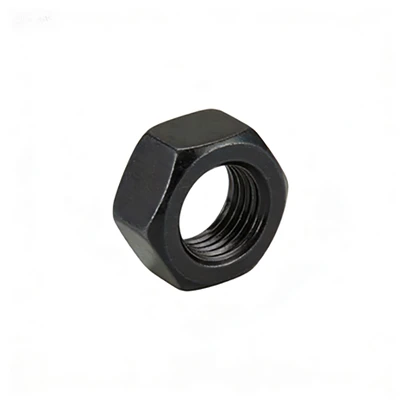
First, let’s start with the basics: what a stud bolt is, for anyone who might be new to the space. A stud bolt is a threaded fastener with threads on both ends, no head in the middle, designed to screw into one component and have a nut tightened onto the other. They’re critical for flanged connections in pipelines, pressure vessels, structural steel assemblies, and even heavy outdoor equipment—places where a regular bolt or screw just can’t handle the stress, vibration, or environmental exposure. When you’re using them indoors, the conditions are controlled: consistent temperature, no extreme moisture, minimal UV exposure. Outdoors? That’s a whole different set of variables.
The biggest outdoor threats to stud bolts fall into four categories: corrosion, temperature fluctuations, UV degradation, and mechanical stress from wind, rain, or thermal expansion. Let’s break each down because that’s where the choice of stud bolt material makes all the difference. Corrosion is the number one killer of fasteners outdoors. If you use a standard carbon steel stud bolt outside, even if it’s coated, it’ll rust within a couple of years in a coastal area or a industrial zone with high sulfur emissions. I had a client a few years back who installed cheap zinc-plated carbon steel studs on a chemical processing tank in Houston—they were shocked when 18 months later, half the studs were corroded so badly the nuts wouldn’t turn, and the tank’s flange was leaking. Zinc plating works for mild indoor environments, but outdoors, especially in high-humidity or salt-air areas, it’s a Band-Aid, not a solution.
That’s why material selection is non-negotiable for outdoor applications. Let’s go through the most common options and where they work best. First, 304 stainless steel: this is the workhorse for general outdoor use. It’s chromium-nickel alloy, which forms a passive chromium oxide layer on its surface that resists rust and corrosion. It’s great for outdoor structures like fence posts, equipment enclosures, or low-pressure flanged connections in temperate climates. But wait—if you’re in a coastal area where salt air is constant, 304 might not hold up. I’ve seen 304 studs corrode at the grain boundary within 3 years in Miami. For those environments, I recommend 316 stainless steel. It adds molybdenum, which boosts resistance to chloride corrosion—salt from sea spray, road de-icing salt, even industrial cleaning chemicals. That’s been the go-to for offshore platforms, coastal bridges, and marine equipment for decades.
But stainless steel isn’t the only option. There’s also galvanized steel, but not the cheap zinc-plated kind I warned you about earlier—hot-dip galvanized (HDG) stud bolts are completely immersed in molten zinc, so the coating is thick and durable. HDG works for outdoor structural applications like sign posts, small bridge assemblies, or non-pressure piping, as long as you make sure the coating is at least 85 microns thick (that’s the industry minimum for outdoor use). I’ve had projects in rural areas where HDG studs outperformed 304 stainless steel because the HDG coating’s sacrificial protection keeps the base steel from rusting, even if there’s a scratch in the coating. The catch? HDG can’t be used with certain metals—like aluminum—because of galvanic corrosion, so you have to make sure your mating parts are compatible.
Then there’s alloy steel, like A193 B7. This is a high-strength carbon-chromium-molybdenum alloy, used for high-pressure, high-temperature outdoor applications—think power plant pipelines, refinery tanks, or steam lines. A193 B7 is strong, but it’s not corrosion-resistant on its own. That’s why we often pair it with a zinc-nickel coating, which is way more durable than standard zinc plating, or even a PTFE coating for extra protection against chemicals. A client of mine who runs a pipeline in Alberta, where temperatures swing from -40°F in winter to 90°F in summer, swears by A193 B7 stud bolts with zinc-nickel coating—they’ve been in place for 7 years with zero corrosion issues, and the material’s strength handles the thermal expansion and contraction that comes with extreme temperature shifts.
Now, even if you pick the right material, installation mistakes can ruin an outdoor stud bolt, no matter how good it is. Let’s talk about that. First, surface preparation: if you’re screwing a stud into a flange or a structural steel component, you have to make sure the hole is clean, dry, and free of rust, oil, or debris. I once visited a job site in Arizona where a contractor skipped cleaning the threaded hole before installing 316 stainless studs. Within two years, the debris trapped between the stud and the hole caused crevice corrosion—small, localized rust spots that ate through the stud’s thread, leading to a structural bolt failure during a windstorm. That’s avoidable. Second, torque: outdoor connections are subject to thermal movement, so you can’t tighten studs with the same torque you would indoors. For flanged connections, especially for pressure applications, you have to use the “bolt-up” sequence—tightening nuts in a crisscross pattern, going in increments, to ensure even pressure. If you tighten a stud too much, it will stretch and fail under thermal stress; too little, and vibration from wind or equipment will loosen the nut over time. I always tell clients: use a torque wrench calibrated for outdoor use, and factor in the material’s coefficient of thermal expansion. For example, stainless steel expands more than carbon steel, so you need a slightly different torque setting when mating the two in outdoor installations.
Another thing people overlook is UV exposure. If you’re using stud bolts to hold outdoor equipment like solar panels, electrical enclosures, or playground structures, UV rays can break down coatings and cause material degradation. Standard zinc plating is actually damaged by UV—after a few years, the coating becomes brittle and chips away. That’s why for solar mounting systems, we recommend either HDG steel with a UV-resistant sealant, or 316 stainless steel, which doesn’t rely on a coating at all. I’ve had a solar installer client who switched from zinc-plated carbon steel to 316 studs for their projects in Florida—after 5 years, the original system had 12% of studs with chipped coating and minor rust, while the 316 system was still as good as new. They saved money long-term by not having to replace studs every few years.
Wait, but what about extreme environments? Let’s say you’re in a desert, where temperatures soar to 120°F during the day and drop to 40°F at night, or a cold climate with heavy snow and ice. Stud bolts still work, but you have to adjust. For desert applications, high-temperature alloys like A193 B8 (stainless steel high-temperature grade) are better than standard 304, because they resist oxidation at high temperatures. For cold climates, A193 B7 is actually good because it has low-temperature toughness—meaning it doesn’t become brittle in freezing weather. I had a client in Minnesota who used A193 B7 studs for a grain silo, and even after the 2021 cold snap that dropped to -50°F, none of the studs failed. They told me they opted for B7 because a cheaper carbon steel stud would have shattered in that temperature.
Common myths I hear all the time: “All stainless steel is the same for outdoors” or “Coated studs never rust.” Let’s bust those. 304 vs 316: I already mentioned that 304 fails in salt air, but it’s also more susceptible to crevice corrosion in areas with high humidity. And coatings—even HDG, which is top-tier for coated studs, will corrode over time if it’s scratched and not sealed. That’s why we always recommend regular inspections for outdoor stud bolt applications: once a year, check for rust, loose nuts, or chipped coatings. It’s way cheaper than replacing a failed stud mid-project.
Now, as a stud bolts supplier, not just a salesperson, I’ll be honest with you: I’ve sent studs that didn’t work outdoors. Early in my career, I sold zinc-plated carbon steel studs for a coastal project, and they rusted within a year. I didn’t do my due diligence to ask about the location, and that mistake taught me a lesson: before I quote any stud bolt for an outdoor application, I ask three questions: Where is it being installed? What is it holding together? And what environmental conditions does it face? That’s how I can recommend the right product, not just the one I have in stock. For example, if it’s a general structural project in a dry, temperate area, HDG is a cost-effective choice. If it’s a pipeline in a salt marsh, 316 is non-negotiable. If it’s a high-pressure tank in a desert, A193 B7 with a PTFE coating is the way to go.
Another angle: regulatory standards. Outdoor stud bolts have to meet specific industry standards to be safe, whether it’s ASME B16.5 for flanged connections, ASTM A193 for alloy studs, or ASTM F593 for stainless steel studs. I always make sure the studs I supply meet these standards, because cutting corners on compliance is a recipe for disaster. A client once tried to use a non-compliant stud bolt for a pressure vessel in Louisiana, and when a inspector caught it, the entire vessel had to be disassembled and re-fastened, costing them $50,000 in downtime. That’s why I never sell anything that doesn’t meet the necessary standards—especially for outdoor applications, where there’s no room for error.
So, to circle back to the original question: Can stud bolts be used outdoors? Absolutely. But success depends on three things: material selection that matches your specific environment, correct installation (clean holes, proper torque, compatible mating parts), and regular inspections to catch issues before they become problems. I’ve seen stud bolts last 20+ years outdoors when done right, and I’ve seen them fail in 12 months when done wrong. It’s not a one-size-fits-all situation.
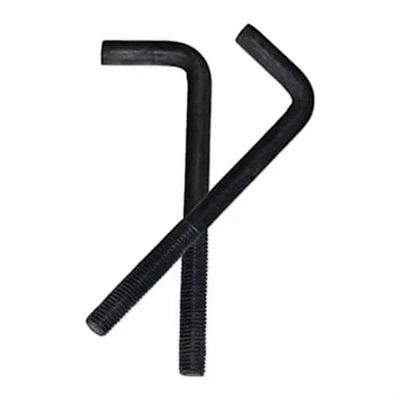
If you’re planning a project that uses stud bolts outdoors, don’t guess at the right product. As someone who’s worked with stud bolts for decades, I’ve seen every possible scenario, from coastal corrosion to desert temperature swings. I can help you pick the right material, confirm compliance with industry standards, and even share installation tips specific to your location and project needs. Don’t risk downtime, safety issues, or costly replacements. Reach out to discuss your requirements today.
Stud Bolts References:
- ASME B16.5, Pipe Flanges and Flanged Fittings, American Society of Mechanical Engineers
- ASTM A193/A193M, Standard Specification for Alloy-Steel and Stainless Steel Bolting Materials for High-Temperature or High-Pressure Service
- ASTM F593/F593M, Standard Specification for Stainless Steel Bolts, Studs, and Threaded Rods for General Application
- NACE International, Corrosion Control in Offshore Structures
Handan Jihao Fastener Co., Ltd.
We’re known as one of the most professional stud bolts manufacturers and suppliers in China. With abundant experience, we warmly welcome you to wholesale customized stud bolts made in China here from our factory. If you have any enquiry about cooperation, please feel free to email us.
Address: A2, Row 31, Feiyu Screw World, Hebei Pu, Linmengguan Town, Yongnian District, Handan City, Hebei Province
E-mail: wenzhaona0@gmail.com
WebSite: https://www.chinaboltnut.com/
