Hey there,
Ever walked past a radiator that keeps your apartment toasty in winter, or stared at the sleek, metallic fins on an AC unit that cools your office in summer? Those tiny, thin metal pieces might seem insignificant, but they’re the unsung heroes of heating, ventilation, and air conditioning (HVAC), refrigeration systems, even some industrial heat exchangers. And if you’re in the business of making those parts (or buy them for your operations), you’ve probably heard folks throwing around the term multi-station fin forming machine. But what is it, exactly? And why should you care if you’re in the market for one? Let’s break this down like we’re chatting over coffee, no jargon overload, promise. Fin Forming Machine

First off, let’s start with the basics: what’s a fin, anyway? It’s that flat, usually aluminum or copper strip with little notches, bends, or holes stamped into it. Its whole job is to crank up surface area—more metal touching air or liquid means better heat transfer. Simple enough. But how do you turn a plain metal roll into a perfect, uniform fin that fits exactly into an AC coil or radiator? That’s where fin forming machines come in. A single-station one does one little thing—maybe punches holes, or bends a side—at a time. But a multi-station fin forming machine? That’s the workhorse of the industry.
Here’s the real tea: a multi-station fin forming machine is a automated, high-production piece of equipment that takes a raw metal coil (aluminum’s the go-to because it’s lightweight, corrosion-resistant, and conducts heat well; copper’s used for higher-demand stuff like refrigeration) and turns it into finished fins in one single, continuous process. No stopping, no moving the fin from machine to machine to do different steps—because that’s where you get human error, inconsistent parts, and wasted time. Multi-station means every “station” is a separate tool doing one specific job, all lined up in a row, and the fin moves from station to station automatically. No hands needed once you load the coil and hit go.
Let’s walk through a typical cycle so you can visualize it. First, you unspool the aluminum coil and feed it into the machine’s infeed section. That’s just a set of rollers that pulls the metal through evenly—no crumpling, no stretching too tight. Then it hits station one: maybe a perforating station, which punches tiny, precise holes where the fin will slide over the coil’s tubes later. Station two could be notching, cutting those little V-shaped bits along the edge that help the fin lock in place without shifting. Station three might be embossing—stamping tiny ridges in the middle of the fin to add more surface area (embossed fins transfer heat way better than flat ones, trust me). Then station four: side bending, folding the ends at exactly the right angle so it fits snugly into the heat exchanger frame. Last station is the cutoff—snipping the long, continuous strip into individual fins of the exact length you need. Bam. One finished fin every couple seconds, perfect, consistent, no messy edges.
Now, why is this such a big deal for HVAC and heat exchanger manufacturers? Let’s get real about the downsides of older, single-station setups. If you have to make fins on one machine, then move them to a punch press, then to a bender, that’s extra labor, extra floor space, and extra chances for a fin to get crumpled or bent wrong mid-move. That’s scrap material—metal you paid for that’s now trash. With a multi-station machine, you cut down scrap by 30-50% sometimes, depending on the model. And speed? Single-station machines might make a few fins per minute. A good multi-station? 60, 100, even 150 fins per minute. If you’re fulfilling a big order for 10,000 AC units, that’s the difference between getting it done in two days vs. two weeks.
Wait, but hold on—isn’t all multi-station machines the same? Nope. Not by a long shot. There are different types, tailored to what you’re making. Let’s keep it simple. Roll form multi-station fin forming machines are the most common for thin aluminum fins—they use sets of interlocking rollers to bend the metal gradually, so no stress that would make the aluminum warp. Then there’s stamping multi-station machines for thicker copper fins, or for fins that need very sharp, precise cuts (like those used in industrial refrigeration that runs super cold). Some even have integrated slitters, so you can load a wide coil and cut it to the exact width you need right in the machine—no pre-cutting the metal beforehand. That’s a nice extra feature.
Now, as a supplier of these machines, I’ll be straight with you: there’s a lot to look for when you’re shopping. First, material compatibility. Can it handle both aluminum and copper? A lot of smaller machines only do aluminum, but if you work with refrigeration parts, copper’s non-negotiable. Then, flexibility—can it make different fin sizes just by changing out a few tooling parts, or do you have to totally reconfigure the whole machine every time? Tooling changes should take minutes, not hours. What about precision? If a fin is even a millimeter off, it won’t fit into the coil, and that’s a waste of a whole heat exchanger. Look for machines with CNC controls—digital screens that let you input fin length, hole size, bend angle, and the machine does the rest, no guesswork.
Also, don’t sleep on upkeep. A fin machine that runs 12 hours a day, 6 days a week is going to wear out parts—rollers, punches, bearings. The good ones have easy-access parts, not proprietary stuff you have to order from the manufacturer and wait 2 weeks for. Some even have predictive maintenance features that alert you when a part is getting old, so you can swap it before it breaks and stops production. That’s a lifesaver for avoiding downtime that costs you money.
Wait, let’s talk about who uses these. It’s not just big HVAC giants. Smaller manufacturers that build custom heat exchangers for marine equipment, or food processing refrigeration, even automotive parts—they all use multi-station fin forming machines. If you’re making anything that needs to move heat, you’re making fins, and you need a machine that can make them fast, consistent, cheap.
I’ve heard a lot of folks say “why not just outsource fin production?” And yeah, you can, but then you’re relying on someone else’s timelines, their scrap rates, their quality control. If you bring fin forming in-house with a multi-station machine, you control every step. You can adjust to customer orders fast—if someone needs a custom fin size in a week, not 3 weeks, you can do it. You also cut long-term costs—no more paying per fin to an external vendor, no more shipping parts back and forth. The machine pays for itself in 1-2 years, depending on how much you use it.
Now, let’s bust a common myth: multi-station fin forming machines are too big for small shops. No, there are compact models that fit on a 10×15 foot space, perfect for a mid-sized shop that’s expanding. The big industrial ones are for huge factories, but there’s a size for every operation.
Let me give you a real example. Last year, we worked with a guy who ran a small shop making custom radiators for vintage cars. He was making fins one at a time by hand, and it was eating into his profit—he could only make 20 sets a week, and half were getting bent wrong. He bought a mid-sized multi-station fin machine, and now he makes 150 sets a week, scrap rate dropped from 40% to 5%, and he just got a contract with a classic car parts distributor. That’s the power of this stuff.
So, if you’re here because you’re thinking about upgrading your fin production, or starting a new line, what’s next? Don’t just buy the cheapest machine on Alibaba or whatever. Look for a machine that fits your current and future needs. Can it handle growth? If you plan to add more products in 2 years, will this machine still work? What kind of support do you get after purchase? A lot of cheap machines come with no help when something breaks, so you’re stuck waiting for a repair guy.
At the end of the day, the multi-station fin forming machine is the backbone of any company that makes heat transfer parts. It turns raw metal into a finished, high-quality component at scale, cuts waste, saves labor, and lets you keep up with demand. If your fins are inconsistent, your whole product line suffers. If your fin production is too slow, you miss orders. That’s why this machine isn’t just a “tool”—it’s a game-changer for a lot of small and mid-sized manufacturing businesses.
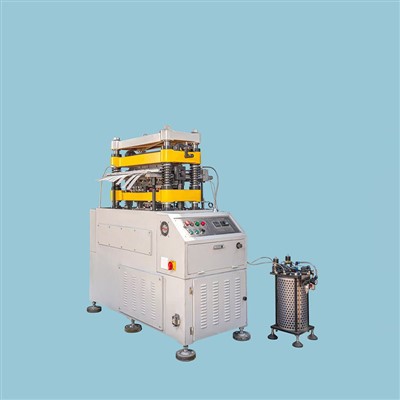
If you’re ready to stop dealing with fin production headaches, want to see how a multi-station fin forming machine could work for your specific line, or just have questions about material compatibility, speed, or size options, don’t hesitate to reach out to our team. We can walk you through different models, show you sample fins our machines produce, and even connect you with other customers who’ve made the switch. No pressure, no sales pitch, just straight answers.
Radiator Fin Forming Machine References
- ASHRAE Handbook: HVAC Systems and Equipment, 2022
- Heat Transfer Engineering, Vol. 41, No. 18, 2020
- Metal Forming Technology Association: Multi-Station Roll Forming Guidelines, 2021
Suichang Lvye Machinery Co., Ltd.
We are one of the most professional fin forming machine manufacturers in China, also support customized service with low price. We warmly welcome you to buy discount fin forming machine for sale here from our factory. If you have any enquiry about quotation, please feel free to email us.
Address: No.402, Mudanting East Road, Miaogao Street, Suichang County, Lishui City, Zhejiang Province
E-mail: L528753@outlook.com
WebSite: https://www.suichanglvye.com/
