Hey there, if you’re in the market for a gypsum block production line—let’s be real, this is a big investment, right? I’ve seen way too many buyers jump in fast, skip the due diligence, and end up with a line that’s either underperforming, falling apart in 12 months, or can’t even meet their production targets. As someone who’s been on the supplier side of this for years (not some random new guy—we’ve installed lines in 10+ countries), I get that inspecting a line before you buy feels overwhelming. Where do you even start? I’m gonna break this down like I would if you were standing in my workshop asking me straight up no BS questions. No corporate jargon, no empty promises—just what actually matters. Gypsum Block Production Line

First off, let’s talk about what you’re actually there for when you inspect a line. It’s not just “does it look shiny?” It’s about making sure it fits your needs, works reliably, and won’t cost you a fortune down the line. I’ve had buyers tell me “I just need 10,000 blocks a day” but they don’t realize their raw material (gypsum powder, water, additives) might not jive with the machine’s setup. That’s the kind of misstep that kills your profit before you even start. Let’s dive into the key areas you need to check, step by step.
First stop: the core production process flow. A gypsum block line isn’t just a bunch of machines slapped together—it’s a sequence that has to be seamless. Let’s walk through it: raw material feeding → mixing → molding → drying → cutting → packaging. You need to inspect each stage, not just stare at the whole line. For raw material feeding: check if the hoppers are sized right for your gypsum batch. If your plant uses bulk gypsum from a local quarry, a hopper that’s too small will mean constant refills, which slows down production. Also, check the feeder mechanism—vibrating feeders are standard, but make sure they’re adjustable. You don’t wanna be stuck with a feeder that either dumps too much gypsum (wasting material) or too little (leading to weak blocks). I’ve seen lines where the feeder was one-size-fits-all and buyers had to retrofit a new one 6 months later—total waste of cash.
Next, mixing. This is make or break, literally. Bad mixing means inconsistent blocks—some crumble, some are too hard, some warp when they dry. When you inspect, ask to see a test mix. Most good suppliers will let you run a small batch with your exact gypsum and additives. Watch the mixing time: it should be consistent, around 1-2 minutes depending on block size. Also, check the mixer’s blades. Are they made from durable steel (like manganese, not cheap mild steel that’ll bend in 6 months)? Worn blades mean uneven mixing, so run your hand over them—if there’s deep grooves or rust, that’s a red flag. Oh, and check if the mixer has a water injection system that’s precise. Too much water makes blocks heavy and slow to dry; too little makes them brittle. A good supplier will have a digital water meter linked to the mixer, so it’s not just guesswork. I’ve had a buyer from Mexico who skipped this check—their line had a manual water valve, and their blocks kept failing strength tests. Had to replace the whole mixing system, cost them 20% of their initial budget. Ouch.
Then molding. This is where the shape of your blocks happens. The mold boxes—are they made from aluminum or steel? Aluminum is lighter, easier to handle, but steel is better for high-volume production (like 20,000 blocks a day). Ask the supplier how many cycles the molds are rated for. A good mold should handle 50,000+ cycles without warping. Also, check the mold’s release agent system. Do you have to spray it manually, or is it automatic? Manual spraying is slow and inconsistent—automatic is way better for speed and uniform blocks. When you do a test run, pull a mold off the line and check for any defects: uneven edges, air bubbles, or gaps. Air bubbles in the mold mean the blocks will have weak spots that break during installation. If the line’s mold vibrator isn’t working right, that’s exactly what happens. So test the mold vibrator—turn it on, feel if it’s strong enough. If it’s wimpy, air bubbles are gonna be your problem. I once had a buyer from Nigeria who went with a cheaper line with a weak vibrator—30% of his blocks had air bubbles. He had to scrap that output, lost a ton of money. Don’t let that be you.
Drying is another big one. Gypsum blocks need to dry slowly and evenly, otherwise they crack or warp. The drying system—usually a tunnel dryer or a kiln? Tunnel dryers are more common for small to medium lines, kilns for high-volume. When you inspect, check the temperature controls. Are they zoned? Zoned drying means different sections of the dryer have different temps, so the blocks dry evenly. If it’s a one-temperature dryer, the outsides will dry fast and the inside stays damp—cracking is inevitable. Also, check the air circulation. Are there fans that move air across all blocks? If some parts of the dryer have stagnant air, those blocks will take longer to dry, slowing down your overall production. I’ve seen lines where the fans are just tiny little things that don’t move enough air—buyers end up waiting 3 days for blocks to dry, instead of 24 hours. That’s a huge bottleneck. Also, ask about the energy source—gas, electric, or biomass? If your local energy is cheap, electric might be fine, but if you’re in a place where gas is cheaper, go that route. Just make sure the dryer’s insulation is good—bad insulation means you’re wasting energy, which adds to your monthly costs.
Cutting and packaging: you don’t want blocks going through the cutting process and breaking, right? The cutting machine—usually a band saw or a wire cutter. Wire cutters are better for gypsum blocks because they’re precise and don’t create jagged edges. Check the wire: is it high-tensile steel? Cheap wire will snap mid-cut, stopping production. Also, check the cutting speed. If it’s too fast, the blocks might be cut unevenly; too slow, and you’re wasting time. For packaging, do you need a line that packs blocks into pallets automatically, or manually? Automatic packaging is better if you have a large workforce that’s expensive, but manual is fine for small lines. Just make sure the packaging machine can handle the size of your blocks. If your blocks are 600x200x100mm, a machine that only does 500mm lengths is useless. Oh, and check the palletizing system—does it stack blocks securely? If pallets fall over during transport, that’s more product loss. I had a buyer in India who went with a cheap palletizer—his pallets collapsed on the way to construction sites, and he had to give refunds. Total nightmare.
Now, beyond the machine parts—what about controls and automation? A lot of new lines have PLC controls, which are programmable logic controllers. They let you set mixing times, drying temps, and production rates. When you inspect, play with the PLC interface. Is it user-friendly? If it’s super complicated, your operators (who might not be tech experts) will mess it up. Also, check if the line has safety features—like emergency stop buttons on every machine, guards around moving parts, and sensors that stop the line if something goes wrong. I’ve seen lines with no safety guards—operators get injured, which is a whole other problem. A good supplier will have all these safety features, not just an afterthought.
Another thing: parts availability. This is something so many buyers overlook. If a part breaks in 6 months, can you get a replacement quickly? If the supplier is overseas, will they ship it fast? Ask for a list of common spare parts—filters, belts, blades, wires. Make sure those parts are easy to source locally or from the supplier. I had a buyer in Brazil who bought a line from a random supplier in China—when the mixing blades wore out, it took 8 weeks to get new ones. His production stopped cold. That’s not the kind of headache you want. A reputable supplier will keep a stock of common parts in their own warehouse, so you can get replacements in a week max.
Also, production capacity matching. You said you need a certain number of blocks a day—make sure the line can actually hit that. A lot of suppliers will overrate capacity, right? Like, they say 15,000 blocks a day, but that’s only if everything runs perfectly, no breakdowns. When you inspect, ask the supplier to run a 4-hour test run. Count how many blocks they make in that time, multiply by 6, and see if it’s close to the rated capacity. If it’s 30% less, that’s a red flag. Also, ask about downtime—how often does the line break down? A good line should have less than 10% downtime. If the supplier says their line has 20% downtime, that means you’re only producing 80% of the time you’re supposed to—huge loss.
Wait, let’s talk about post-inspection stuff too. Once you’ve checked the machines, ask the supplier for references. Talk to other buyers who have the same line. Ask them: does it run as advertised? Are parts easy to get? How’s the customer service? I once had a buyer who bought a line from me and later told me that the reference from the supplier was a fake company—so he checked other buyers online. That saved him from a bad deal. Also, ask about training. Will the supplier send technicians to train your operators? Running a gypsum line isn’t hard, but if your operators don’t know how to adjust the mixer or fix a minor jam, it’ll break down more. A good supplier will offer free training, either on-site or via video, for the first month.
Oh, and don’t forget about space! When you inspect, check if your production facility has enough space for the line. The line needs room for raw material storage, the machine itself, drying area, packaging, and finished goods storage. I’ve had buyers build a new workshop just for the line, but then the supplier’s line was 10 feet longer than they planned—now they can’t fit the palletizer. That’s a stupid mistake, easy to avoid. Measure your space, compare it to the supplier’s line dimensions, double-check.
Last tip: trust your gut. If the supplier rushes you, doesn’t let you run a test batch, or dodges your questions about parts availability, that’s a bad sign. A good supplier will want you to inspect every single part, ask all the annoying questions, because they’re confident in their line. I always tell buyers: if you’re not comfortable with the inspection, walk away. There are plenty of good options out there.
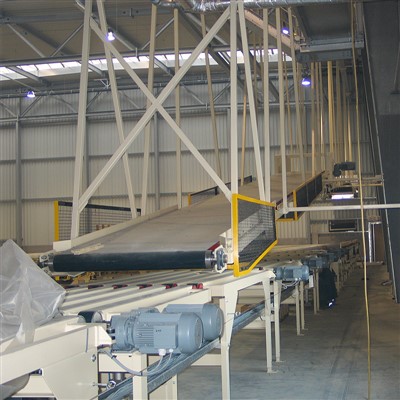
At the end of the day, buying a gypsum block production line is an investment in your business. Skipping the inspection step can cost you thousands (even tens of thousands) in lost production, repairs, and refunds. You don’t want to be the guy who says “I should’ve checked that” 6 months after buying a lemon. If you’re ready to start inspecting lines and want to talk through any questions you have, just reach out—we’re here to help you find a line that works for your specific needs.
Cement Mortar Mixing Plant References
- Gypsum Construction Handbook, US Gypsum Association, 2018.
- Industrial Production Line Maintenance Guide, International Society of Automation, 2020.
- Gypsum Block Manufacturing: Process and Quality Standards, European Gypsum Industry Association, 2021.
Shineye Mach Co., Ltd.
Shineye Mach Co., Ltd. is one of the most reliable manufacturers and suppliers of gypsum block production line in China, also supports customized service with reasonable price. Please feel free to buy advanced gypsum block production line made in China here from our factory. For quotation, contact us now.
Address: Jinzhou Circular Industry Park, Jinzhou City, Shijiazhuang City, Hebei Province, China
E-mail: xiangyijixielucia@yeah.net
WebSite: https://www.shineyemach.com/
