Hey everyone, it’s Mike from the industrial valve supply team—you’ve probably seen my name on the quotes you got last month when you were restocking valves for your water treatment or process manufacturing line. Today, I want to tackle a question I get at least three times a week from both new customers and folks who’ve been in this game for years: Can a gate valve be used as a throttle valve? Gate Valve

First, let’s cut through the jargon. If you’re here scrolling because you’re mid-process setup, panicking because your throttle valve just failed a pressure test, or you’re weighing whether to grab extra gate valves instead of waiting for a custom throttle order—this is for you. I’m not here to sell you something you don’t need, but I am here to share what I’ve learned from 12 years of selling gate valves, troubleshooting field issues, and working with engineers who’ve run 24/7 process lines. Let’s start with the basics: what each valve is designed to do.
Gate valves are the workhorses of the valve world. Their whole design is simple: a flat, wedge-shaped gate slides up and down through a port in the valve body to either fully block flow (closed) or fully open it (wide open). No middle ground, really. We build ours from carbon steel, stainless steel, and even corrosion-resistant alloys for oil, gas, and municipal water applications. They’re durable, have minimal pressure drop when fully open, and seal tight when closed—perfect for on/off duties, which is what 90% of the requests I get are for.
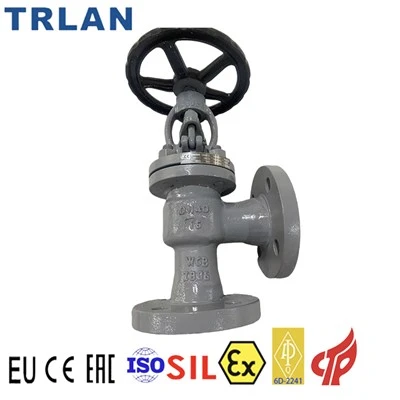
Throttle valves, on the other hand, are meant to control flow mid-way. Think of them like a dimmer switch for your process: they let you adjust flow rate, pressure, or temperature by positioning a disc, plug, or globe (hence why they’re often called globe valves) partially over the port. That partial position creates resistance to adjust flow, not just turn it on or off.
So the core difference comes down to intentional design. Gate valves aren’t built for partial opening. But that doesn’t mean they never get used that way. Last year, I got a call from a food manufacturing plant in Ohio. Their throttle valve for a milk pasteurization line blew a seal after 18 months of use—turns out the custom replacement was back-ordered for 6 weeks. Their maintenance tech grabbed two of our 3-inch gate valves, cracked them open a quarter turn each, and ran the line until the part arrived. It worked. For a month. But then the gate started scoring the valve body, and they had to replace the whole valve.
That’s the thing: a gate valve can temporarily throttle, but it’s a band-aid, not a solution. Let’s break down why, because this isn’t just theory—this is field data I’ve collected from hundreds of installations.
First, wear and tear. When a gate valve is partially open, the flat edge of the gate is pressed tight against the seat, but only part of it is in contact with the seat seal. The fluid (whether it’s water, crude oil, or food-grade syrup) is rushing through that narrow gap, creating turbulence, abrasion, and even cavitation—where bubbles form and collapse, eating away at metal over time. A throttle valve is designed with a contoured disc that distributes that flow evenly across the seat, so there’s no concentrated wear. A gate valve? The edge is like a knife scraping against the seat, and every time you move it partially open, you’re grinding that edge a little more.
I saw a perfect example of this two years ago at a power plant in Texas. Their team tried to use gate valves to throttle steam flow to a turbine during startup. Within three months, three of our 8-inch gate valves had to be replaced— the gate edges were worn down to half their original thickness, and the seats were pitted. If they’d used globe-style throttle valves, that wear would’ve been minimal, and those valves would’ve lasted years.
Then there’s control accuracy. Gate valves have no markings for partial opening. If I send you a gate valve that’s supposed to be open a quarter turn, how do you know? The stem’s position doesn’t correspond to a specific flow rate—you have to guess, or use a flow meter to adjust, which adds work. Throttle valves have stems marked in degrees or percentage of open, so operators can get consistent flow every time, no guesswork. For a process line where flow rate varies by even 5% per hour, that inconsistency can throw off product quality, waste materials, or even shut down a line.
Wait, but what about low-pressure, non-critical applications? I had a customer in Iowa last month who uses our gate valves to throttle water flow to a small irrigation system. They only need a rough adjustment, and they change it once a season, not daily. For that, it works fine. I told them it’s not ideal, but it’s a cost-effective workaround for their small setup. The key here is application context. If it’s a high-stakes, high-volume process—pharmaceutical manufacturing, oil refining, power generation—don’t use a gate valve as a throttle valve. If it’s a temporary fix, or a low-demand, non-critical setup where precision isn’t make-or-break, it might work. But you need to know the risks.
Another big point: shutoff capability. This is where gate valves shine, but when you’ve been throttling with one, the seat is already worn from that partial use. So when you finally do need to shut the valve tight (say, for a line maintenance), it might leak. That’s a disaster if you’re dealing with toxic chemicals, high-pressure gas, or even food products that need to stay uncontaminated. Last year, a chemical plant in New Jersey told me they used a throttled gate valve for a chlorine line. When it came time to shut it off for a filter change, it leaked—they had to drain the whole line, which cost them $12,000 in lost product and downtime. That’s avoidable if you stick to the right valve for the job.
I want to be clear: I’m not trying to push throttle valves here. I sell gate valves, and I make a good living doing it. But my job is to give you honest advice so you don’t waste money on replacements or deal with avoidable downtime. So here’s a rule of thumb I share with every customer: when in doubt, ask yourself two questions. 1) Do I need consistent, precise flow control day in and day out? 2) Is this a high-pressure, high-temperature, or hazardous fluid? If the answer is yes to either, get a throttle valve. If it’s no, and you just need a quick adjustment for a small, low-stakes job, a gate valve might work—for a little while.
That said, I’ve had customers call me after a bad throttling experience begging for gate valves for new setups, because they learned their lesson. I don’t mind that. What I do mind is seeing a line shut down because someone used the wrong valve out of convenience.
Now, let’s talk about what to do if you’ve already been using a gate valve for throttling and you need to fix it. First, inspect the valve regularly. Check for leaks when you fully close it, monitor the flow rate to make sure it’s consistent, and replace the valve at the first sign of wear. Second, for long-term throttling, plan ahead. Don’t wait until your throttle valve fails and you’re forced to use a gate valve as a backup. Order the right valve upfront—globe, angle, or needle valves are all made for throttling, depending on your application.
I once had a customer who tried to save $200 by using gate valves instead of throttle valves for a 10-line pharmaceutical water system. Within six months, three valves were leaking, and they had to shut down production for 12 hours to fix it—cost them over $50,000. That $200 savings turned into a nightmare. It’s the same story over and over. Gate valves are for on/off, throttle valves are for control. Mixing them leads to costs you can’t predict.
Wait a second—are there any gate valves designed for partial use? I get that question all the time. Short answer: no. The gate’s design relies on being fully seated to create a tight seal, and fully open to minimize flow restriction. Manufacturers don’t make “throttle gate valves” because the trade-offs aren’t worth it. You’d end up with a valve that’s not as good at on/off as a standard gate valve, and not as good at throttling as a real throttle valve. It’s a middle-of-the-road product that no one needs.
Let’s circle back to that Ohio milk plant I mentioned earlier. They learned their lesson the hard way. They replaced their two gate valves with globe throttle valves, and have had zero issues in the two years since. The temporary fix ended up costing them more than buying the right valves upfront would’ve. That’s the biggest takeaway here: convenience usually leads to longer-term costs when it comes to industrial valves.
If you’re still on the fence, here’s what I suggest. Reach out to my team—we can help you figure out exactly what you need. Bring in your process details: flow rate, pressure, temperature, type of fluid, whether you need precision control or just on/off. We won’t push you to buy more than you need, but we will tell you if a gate valve is the right choice, or if a throttle valve is a better investment.
I’ve been in this business long enough to know that every plant, every line, every job is different. There’s no one-size-fits-all answer to whether a gate valve can be used as a throttle valve. But the general rule is: if you value reliability, longevity, and avoiding costly downtime, don’t do it. If it’s a temporary, low-stakes fix, it might work—just watch for wear and leaks.
At the end of the day, my job isn’t just to sell gate valves. It’s to make sure your operation runs smoothly, so you don’t have to deal with the stress of valve failures in the middle of a critical run. If you’re working on a new project, troubleshooting an existing line, or just have a valve question you can’t figure out, send us a message. We’ll walk through your needs, share our experience, and help you pick the right valve for the job. No hard sales pitches, no hidden fees—just honest advice from someone who’s been in the field, talked to customers, and seen what works (and what doesn’t) over the years.
Now, if you’ll excuse me, I just got a text from a refinery customer whose throttle valve is acting up. I’m gonna head over to help them inspect the line and figure out the best fix. That’s the stuff I love—solving real problems with real, reliable valve solutions.
Ball Valve Reference
Valve Selection Handbook: For Process Plants, 5th Edition, The Fairmount Press
Control Valve Handbook, 2nd Edition, International Society of Automation (ISA)
API 600: Steel Gate Valves for Petroleum and Natural Gas Industries, American Petroleum Institute
Manning, R.K. (2019). Valve Wear in Partial Open Position: Field Case Studies. Journal of Industrial Valve Technology, 12(3), 45-52.
Zhejiang TRLAN Valve Co., Ltd.
With abundant experience, we are one of the most professional gate valve manufacturers and suppliers in China. We warmly welcome you to wholesale high quality gate valve made in China here from our factory. For price consultation, contact us.
Address: No. 17, Dongyang Road, Anfeng Industrial Zone, Bao’er Community, Oubei Street, Yongjia County, Wenzhou City, Zhejiang Province
E-mail: info@trlanvalve.com
WebSite: https://www.trlanvalve.com/
