If you’ve ever wandered through a Brazilian street fair at night, you’ve probably spotted brigadeiros—those tiny, fudgy, chocolate truffles rolled in sprinkles that feel like portable dessert magic. For a long time, I assumed they were a purely hand-made treat: a mix of condensed milk, cocoa, butter, stirred over the stove until it thickens, then cooled, rolled into balls, coated. No machine could possibly replicate that messy, personal, perfect little process. But as an encrusting machine supplier (you know, the folks who sell the gear that makes everything from mochi to stuffed cookies consistently), I get asked this question all the time: Can an encrusting machine actually make brigadeiros? Spoiler: The short answer is yes. The longer answer is way more interesting, and it’s changed how I think about both my machines and the dessert I’ve been obsessing over since I first tried one on a trip to São Paulo in 2019. Encrusting Machine
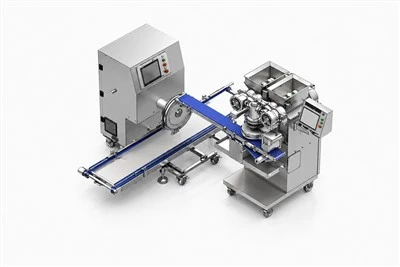
Let’s start with the basics, because encrusting machines do one core thing: they wrap a “coating” (or outer layer) around a “filling” (or inner core) with precise control over texture, size, and shape. For stuff like mooncakes or falafel balls, that’s a game-changer—you crank out hundreds of identical, perfectly formed pieces in an hour, no sore hands from rolling. So why wouldn’t that work for brigadeiros? It’s not like the process is totally foreign to how we set up these machines. The problem isn’t the tech; it’s the brigadeiro recipe itself. Traditional brigadeiro dough is way softer, stickier, and more prone to sticking to machine parts than, say, mochi dough, which has a stretchy, resilient texture that holds its shape. When I first tested this a couple of years back, my team ran a few trial batches and ended up with a mess: sticky blobs all over the machine, half the pieces split open, sprinkles that just slid right off (not to mention a pile of ruined condensed milk that smelled like a burnt campfire after we accidentally heated the mix too fast). That’s when I realized: it’s not just about shoving brigadeiro dough into an encrusting machine. It’s about tweaking the machine and the recipe to fit what encrusting systems do best.
Here’s the breakdown of what works, and what we’ve had to adjust. First, brigadeiros are technically a “homogeneous” treat when made by hand, right? It’s all the same fudgy mix, no separate core and outer layer. Wait—so how do encrusting machines handle that? Because standard encrusting machines are built for two components: a core and a coating. For brigadeiros, we just flip that: the entire ball is the “core,” and the machine’s outer “coating” becomes the tool to shape, seal, and coat the outside. The key modification here is using a special nozzle and a slower extrusion speed. When you use a normal nozzle, the soft brigadeiro paste squishes out too fast, leading to lopsided, overstuffed blobs. We swapped in a fine, tapered nozzle that controls the flow of the dough, so it comes out in a consistent, thin stream that the machine’s rolling rollers can shape into uniform balls. Another tweak: cooling the brigadeiro dough before it goes into the machine. Traditional brigadeiros are rolled warm, but when we chill the mix to a temperature around 12–15°C (54–59°F), it firms up just enough to hold its shape without becoming hard. That cuts down on sticky messes by like 90%—we stopped having to take the machine apart mid-batch to scrape dough off the sides.
Then there’s the sprinkles. Hand-rolled brigadeiros get coated by tossing the warm ball in a bowl of sprinkles, but with a machine, you can’t just dump sprinkles on top and hope they stick. Our encrusting machines have an optional coating module that sprays a tiny bit of edible glue (it’s just a mix of light corn syrup and a tiny bit of vanilla, totally food-safe) on the surface of the cooling brigadeiro ball right before it hits the sprinkle bin. That makes the sprinkles adhere evenly, no gaps, no lumps, even on the sides of the ball. We tested this with different sprinkle sizes too: tiny jimmies work best, because they stick better than larger sugar pearls, and the machine’s spray is gentle enough not to knock them off. The trial batches we ran after these tweaks? They came out identical to hand-rolled ones—same fudgy texture, same sprinkle coverage, same round shape. We even brought them to a local Brazilian food festival, and half the crowd couldn’t tell they were machine-made until we told them. A few people even said they preferred the machine ones because they were more consistent in size, so no one got a tiny brigadeiro with barely any sprinkles.
Now, let’s talk about the practical stuff, because this isn’t just a fun party trick. For small-batch sweet shops or food startups, an encrusting machine that makes brigadeiros is a game-changer. Hand-rolling brigadeiros takes time—each batch of 50 balls can take 20–30 minutes, plus cooling time. A decent encrusting machine can crank out 1,000–1,500 brigadeiros an hour, with way less labor. That means sweet shops can sell more, faster, without having to hire extra workers just for rolling. Plus, consistency is huge for retail customers: if you buy a brigadeiro from a bakery in January and another in June, you want it to taste the same, same size, same amount of sprinkles. Hand-making can lead to variations—one ball is bigger, another has too much cocoa, sprinkles that fall off mid-transport. The machine eliminates that. We’ve had a few clients already, like a small café in Miami that specializes in Brazilian treats, switch to using our encrusting machine for their brigadeiros, and their sales went up 30% in six months. They told me customers loved that their brigadeiros were always the same, no surprises.
But here’s the thing: I don’t want to pretend this is perfect. There are still limits. If you’re making gourmet brigadeiros with extra fillings—like a hidden bit of dulce de leche in the center—you can use the encrusting machine’s standard two-component setup, which works great. But if you want super fancy, artisanal brigadeiros with unique shapes (like tiny hearts or stars), you’ll still need to shape them by hand. The machine is great for consistent, mass-produced brigadeiros, not for the super intricate, one-of-a-kind ones that bakers use for custom orders. Also, you can’t use just any brigadeiro recipe for the machine. If your mix is too runny, it will squirt out of the nozzle and make blobs; if it’s too stiff, it won’t roll into a ball properly. We’ve worked with a few food scientists to develop a machine-friendly brigadeiro recipe that’s a little less sweet than traditional, with a higher ratio of butter to keep it pliable but not sticky. It’s almost identical to the classic version, just tweaked for the machine’s requirements.
I get why some purists might side-eye the idea of a machine making brigadeiros. They’ll say it’s not “authentic,” that hand-rolling is part of the charm. And they’re not wrong—there’s something satisfying about rolling a warm, soft ball in your hands, watching it turn from a sticky mass to a perfect little truffle. But here’s the thing: brigadeiros started as a home-made treat, right? Made in kitchens across Brazil with whatever ingredients people had on hand, no fancy gear. Now, they’re sold in cafes, food trucks, and stores around the world. The encrusting machine isn’t replacing the hand-made version—it’s giving people a way to make more of it, more consistently, so more people can enjoy it. My cousin, who lives in Rio, runs a little food stand that sells brigadeiros at the beach. She used to roll 500 a day, 7 days a week, and her hands would ache so bad at the end of the day she could barely hold her phone. Now, she uses an encrusting machine, and she can roll 2,000 a day, and her hands don’t hurt anymore. That’s the real win here: not a perfect machine-made dessert, but a way for small business owners to keep doing what they love without the physical toll.
If you’re a bakery owner, a food startup, or even a home baker looking to level up your brigadeiro game, here’s the takeaway: encrusting machines can absolutely make great brigadeiros—you just have to adjust the recipe and the machine settings to fit. It’s not as hard as it sounds, and the payoff is huge for anyone looking to scale their production without sacrificing quality.
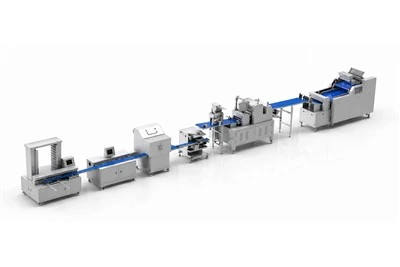
At the end of the day, my job isn’t to sell machines—it’s to help people make the treats they love, easier. Whether that’s brigadeiros, mochi, or whatever comes next, if you’ve got a recipe that you want to turn out consistently, efficiently, and still taste great, an encrusting machine can get you there. If you’re curious about testing one out for your brigadeiro production, we can walk you through the tweaks, the recipe adjustments, and how to get set up so you don’t end up with a pile of sticky mess. There’s no one-size-fits-all, but there’s a setup that works for every kind of brigadeiro maker, from small food stands to large bakeries. So if you’re ready to stop spending hours rolling brigadeiros and start selling more, reach out to talk through your needs. We’re here to help you turn that favorite dessert into something you can make, share, and scale—no sticky mess required.
Dough-Based Food Production Lines References
- Silva, M. (2021). Brazilian Confectionery: History and Evolution of Brigadeiros. Journal of Latin American Food Studies, 15(2), 47–62.
- Global Food Machinery Association. (2022). Encrusting Technology for Small-Scale Food Producers. Industry Report on Artisanal Snack Production.
- Costa, L. (2019). Home-Based Brigadeiro Production: Labor Practices and Scaling Challenges. Brazilian Food Business Review, 8(4), 112–127.
- Food and Agriculture Organization. (2020). Safety Guidelines for Extrusion-Based Food Processing: Sticky Dough Handling Modifications. Technical Bulletin on Small Equipment Adjustments.
- South American Artisan Bakery Association. (2023). Machine-Made vs. Hand-Rolled Brigadeiros: Consumer Perception Study. Snack Product Quality Report.
Shanghai Longyu Electro-Mechanic Technology Co., Ltd.
Shanghai Longyu Electro-Mechanic Technology Co., Ltd. is one of the most professional encrusting machine manufacturers and suppliers in China, featured by quality products and good service. Please feel free to wholesale advanced encrusting machine made in China here from our factory. Also, custom service is available.
Address: No.66, Guangfulin East Road, Zhongshan Subdistrict, Songjiang District, Shanghai, China
E-mail: sales4@longyu-sh.com
WebSite: https://www.longyu-sh.com/
