When I started my forklift supply business 12 years ago, I made a mistake that cost one of my first clients thousands of dollars. They kept maintenance records on a crumpled notebook tucked in their office closet, and when their primary forklift broke down mid-shift, we spent three hours searching for its service history instead of troubleshooting the faulty hydraulic pump. That delay meant a frozen delivery for their biggest retail customer, and they almost didn’t renew their contract. Since then, I’ve learned that accurate maintenance records aren’t just a bureaucratic box to tick—they’re the backbone of forklift safety, equipment longevity, and operational reliability, especially for the clients I support as a forklift supplier. Forklift
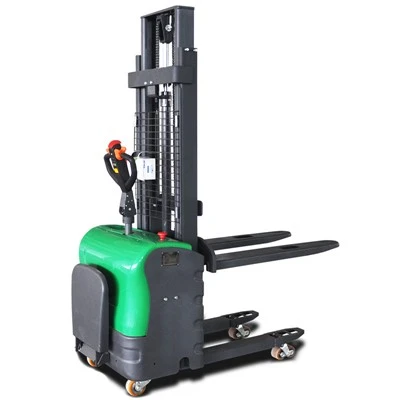
Forklifts are workhorses, but they’re also complex pieces of industrial equipment with dozens of moving parts that degrade over time. Skipping or misdocumenting maintenance doesn’t just lead to unexpected breakdowns; it creates safety hazards that can endanger operators, warehouse staff, and bystanders. Over the years, I’ve helped hundreds of clients implement systems that work for their unique operations, from small 2-warehouse distributors to large 10-location manufacturing firms. The right system doesn’t have to be overly complicated, but it does need to be consistent, accessible, and tied directly to your forklift’s performance.
First, let’s break down why accuracy matters beyond just avoiding breakdowns. For new operators, reviewing a forklift’s service history is one of the fastest ways to learn its quirks—like that the steering gets stiff after 500 hours, or that the brakes need a slight adjustment every quarter. For maintenance teams, detailed records cut down on diagnostic time: if you note that a particular model’s fork tilt cylinder leaked twice in the last six months, you can replace that component proactively instead of waiting for it to fail. And for regulatory compliance—OSHA requires regular inspections and maintenance for all heavy equipment, and incomplete records can lead to fines that run into thousands of dollars. I’ve seen clients with spotty records get hit with $13,000 OSHA citations after a random audit, simply because they couldn’t prove they’d serviced their forklifts on schedule.
Now, how do you build a system that actually works? It starts with defining what needs to be tracked. I tell all my clients that every entry should answer four basic questions: What work was done? When was it done? Who did it? And what parts were used. That might sound simple, but it’s easy to skip details like “used OEM brake pads” instead of “replaced brakes” — and those small details make a huge difference when you’re sourcing replacement parts or troubleshooting recurring issues.
Let’s start with the basics: tracking routine inspections. Every forklift operator should perform a pre-shift inspection, and those records can’t be an afterthought. Many small operations let operators jot down quick notes on a clipboard, but those papers often get lost or mixed with old invoices. Instead, I recommend creating a digital log for pre-shift checks—even a shared spreadsheet works for small fleets. Fields should include the forklift’s unit number (critical when you have multiple machines), date, operator name, and a checklist of key items: tire pressure, brake function, hydraulic fluid levels, fork condition, and any unusual noises or vibrations. For example, if Operator Maria notes on 10/12 that “Forklift 17 has a slow brake pedal,” that entry lets the maintenance team address the issue before it becomes a safety risk, instead of waiting for a breakdown.
Then there’s scheduled maintenance—oil changes, filter replacements, battery checks, tire rotations—and these require even more precision. Most forklift manufacturers recommend service at set hour intervals, like every 200, 500, or 1000 hours. Accurate record-keeping here means tying the service to exact hour readings, not just a vague “every six months.” I once had a client who changed their forklift oil every calendar quarter, regardless of how many hours the machine was actually running. Their forklifts developed premature engine wear because their machines only ran 200 hours a quarter, making the annual change cycle too infrequent. By switching to a hour-based log, we adjusted their schedule to every 300 hours, and their engine failure rate dropped by 80% in a year.
One common mistake I see is mixing up service hours across the fleet. If you have 10 forklifts, each with their own usage patterns, you can’t just track hours in a single master log—each unit needs its own dedicated record. Some of my clients use color-coded binders for each forklift, while larger operations use fleet management software that automatically tracks hour meters. The key is that the log is attached to the individual machine, not just the warehouse or operator. When a forklift is moved between sites, its maintenance history goes with it, so any new team working on it has full context.
What about corrective maintenance—when something breaks unexpectedly and needs repair? These entries are just as important as scheduled service. If a forklift’s transmission fails, you need to note the exact problem, the repair date, the replacement parts used, and the technician who completed the work. Over time, these records help you spot patterns: if three out of five of your 2020-model forklifts have needed transmission repairs in the last year, that might be a sign to prioritize replacing those units during your next fleet upgrade. As a forklift supplier, I often share this kind of data with clients when recommending new equipment—proving that a slightly higher upfront cost for a more reliable model will save thousands in repair costs over time.
Technology has made record-keeping far easier than the old paper-and-clipboard days, but there’s no one-size-fits-all tool. For small fleets (1-5 forklifts), a simple Google Sheet or Excel workbook works perfectly. I advise creating a tab for each forklift, with columns for service date, hour meter reading, service type, parts used, technician, and notes. For larger fleets (10+ units), dedicated fleet management software is worth the investment—tools like Forklift Tracker or Trimble WorksManager automatically sync hour meter readings, send reminders for scheduled service, and store all records in a secure, accessible cloud location. These tools also make it easy to generate compliance reports for OSHA or insurance, which can be a lifesaver during an audit.
But even the best technology fails if people don’t use it consistently. That’s why training is non-negotiable. I host quarterly workshops for my clients’ maintenance and operations teams on how to fill out records correctly, why the details matter, and how to access the logs when they need them. One client, a 3PL provider with 22 forklifts, had a problem where operators were skipping pre-shift inspection entries on their software. We worked with their team to add a quick 2-question confirmation at the end of each shift: “Did you complete the pre-shift check for Forklift X? If yes, check here.” That small change cut missing entries by 90% in just a month.
Another tip: store records in a way that’s accessible to everyone who needs them. If your maintenance team can’t pull a log at 2 a.m. when a forklift breaks down, the record is useless. Cloud-based tools solve this, but if you’re using paper, keep each forklift’s binder in a locked but easily accessible area near the warehouse fleet. I also recommend keeping digital backups of all paper records—scan in every service invoice and inspection note and save them to a cloud drive, so you never lose a record even if a binder gets damaged or lost.
Don’t forget about long-term record-keeping. Forklift maintenance records should be kept for as long as the machine is in operation, plus a few years after it’s retired. Many clients sell or trade in forklifts without realizing that prospective buyers or insurance companies will ask for full service history. I’ve had clients get 15% more for a used forklift because they could provide a complete, accurate maintenance log—something that gives buyers peace of mind about the equipment’s condition.
Now, let’s talk about common pitfalls to avoid. First, don’t wait to record maintenance. The moment you complete a service, update the log. Waiting a week means you’ll forget the exact parts used or the hour meter reading, leading to inaccuracies. Second, don’t skip minor services. Even a small oil top-up or a brake adjustment needs to be noted—these small entries build the complete picture of a forklift’s health. Third, don’t store records in multiple places. If half your logs are in a spreadsheet and half are in a binder, you’ll end up with missing information when you need it most.
As a forklift supplier, my goal isn’t just to sell you a piece of equipment—it’s to help you keep it running safely and efficiently for as long as possible. Accurate maintenance records are one of the most effective ways to do that. They reduce downtime, lower repair costs, keep your team safe, and even boost the resale value of your fleet.
If you’re ready to streamline your forklift maintenance process, or you’re in the market for reliable, well-serviced forklifts for your operation, reach out to our team to arrange a time to discuss your needs and explore solutions that work for your business.
Electric Forklift References
OSHA. (2023). Powered Industrial Trucks. Occupational Safety and Health Administration.
Material Handling Industry of America. (2022). Forklift Maintenance Best Practices. MHIA.
Trimble Inc. (2023). Fleet Management for Material Handling Equipment. Trimble WorksManager.
National Institute for Occupational Safety and Health. (2021). Forklift Safety and Maintenance Guidelines. NIOSH.
Huazheng Heavy Industry Machinery Equipment Co., Ltd.
With abundant experience, we are one of the most professional forklift manufacturers and suppliers in China. Please feel free to buy high quality forklift for sale here from our factory. We also accept customized orders.
Address: Room 423-101, Building C-4, Electronics Valley Technology Center, No.3088 Lekai North Street, Gaokai District, Baoding City, Hebei Province, China
E-mail: sales02@hzheavy.com
WebSite: https://www.hzheavy.com/
