If you’ve ever searched for customized PVC film, chances are you’ve stumbled on a lot of generic products that don’t quite fit your exact needs. As a supplier who’s specialized in tailored PVC solutions for over a decade, one question I get more than any other is this: “Can I get customized PVC film with a scratch-resistant coating?” The short answer is yes, but the full story is a little more nuanced than just “yes” or “no.” It’s not just about picking a coating and slapping it on your film—it’s about matching the right coating to your film’s base, your end use, and the unique challenges of your application. Customized PVC Film
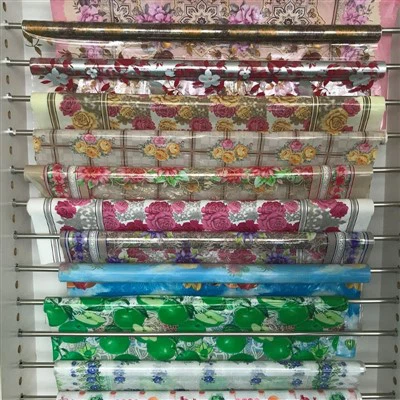
Let’s start with the basics: what is a scratch-resistant coating for PVC, anyway? Unlike generic protective coatings, these are formulated to create a hard, durable top layer that resists scuffs, abrasions, and minor surface damage. Most are made from acrylics, polyurethanes, or hybrids of the two, each with their own strengths. Acrylic coatings are popular for their clarity and affordability, making them a go-to for applications like signage, window graphics, or decorative panels where you don’t want to alter the film’s appearance. Polyurethane coatings, on the other hand, are tougher—they can handle more repeated friction, making them ideal for products that get a lot of handling, like phone cases, appliance skins, or automotive interior trim.
But here’s the thing: you can’t just take any PVC film and add a scratch-resistant coating. The base PVC film itself has a big impact on how well the coating bonds. If your base film is too soft, the coating will peel or crack over time because it can’t flex with the film. If it’s too rigid, the coating might not stretch without breaking, which is a problem if you’re using the film for curved surfaces or applications that require molding. That’s where customization comes in. As a supplier, we don’t just offer off-the-shelf film and a standard coating—we work with you to adjust the film’s formula and the coating’s composition to create a product that works for your specific use case.
Take a recent example that comes to mind. A client in the food service industry reached out to us a few months ago. They make custom menu boards for restaurants, and their old PVC film was scratching so easily that the menu boards looked worn out after just a few months of use—even with lamination. They wanted a film that could stand up to being wiped down multiple times a day with cleaning solutions, that was clear enough for bright graphics, and that could be cut and shaped into curved frames without cracking. We didn’t just pick a random scratch-resistant coating. First, we adjusted their base PVC film to have a slightly higher durometer (the measure of a material’s hardness) than standard menu board film—this gave the coating a stable surface to bond to. Then, we chose a hybrid acrylic-polyurethane coating: it was tough enough to resist scuffs, clear enough to keep the graphics sharp, and flexible enough to bend without breaking when the menu board was installed. The client ended up with a product that’s held up for over a year, even in busy cafes with heavy foot traffic.
Another common use case is automotive interior components. Many car manufacturers use PVC film for door panels, dashboard skins, and center console trim. These parts are exposed to everything from keys scratching against them to sunlight that can make regular PVC brittle. For these applications, we use a cross-linked polyurethane coating—cross-linking means the molecules in the coating are chemically bonded to each other, creating a harder, more abrasion-resistant surface. We also add UV stabilizers to the mix, so the coating doesn’t yellow or break down when exposed to sunlight. A few years back, we worked with a custom automotive parts maker who was struggling with their interior trim scratching during assembly. By adjusting the coating’s thickness (we went with a 25-micron layer instead of the standard 15-micron) and matching it to a semi-rigid base PVC film that could handle the molding process, they cut their scratch defects by 80% in just three months.
Of course, scratch resistance isn’t one-size-fits-all. Some clients need a coating that resists minor scuffs, others need one that can handle heavy industrial use, and some need something in between. That’s why customization is key. When you work with a supplier that offers tailored solutions, you get to choose: the type of base PVC (calendered vs. extruded, for example), the thickness of the film, the type of scratch-resistant coating, and even additional properties like chemical resistance, flame retardancy, or anti-fingerprint features.
Wait, but what about common myths around scratch-resistant PVC film? I hear two a lot. First, that all scratch-resistant coatings make the film less flexible. That’s not true—if the coating is formulated correctly, it can be just as flexible as the base film. The key is in the cross-linking ratio and the resin used. Second, that adding a scratch-resistant coating is too expensive for small orders. A lot of people assume customization is only for large bulk orders, but over the past five years, we’ve invested in equipment that lets us process smaller runs without jacking up the price. Whether you need 500 feet of custom film for a small business or 50,000 feet for a major brand, we can adjust the process to fit your budget.
But let’s talk about the application process, because that’s where a lot of suppliers cut corners. Applying a scratch-resistant coating to PVC isn’t just spraying it on and letting it dry. It requires precise control over temperature, tension, and curing time. If the coating is applied too thinly, it won’t offer enough protection. If it’s applied at the wrong temperature, it might not bond properly to the base film. If the curing time is too short, the coating will be soft and scratch easily. As a supplier, we have quality control checks at every step: before coating, we test the base film’s surface energy to make sure the coating will adhere; after coating, we do abrasion resistance tests (like Taber abrasion testing, which measures how much material is worn away after a set number of rubs) to ensure the coating meets your specs.
I mentioned Taber testing earlier—let’s dive a little deeper, because it’s a good way to understand how scratch-resistant coatings perform. A standard uncoated PVC film might have a Taber abrasion weight loss of 100 milligrams after 1,000 rubs. A basic acrylic coated film might be 50 milligrams. A customized hybrid coating we developed for industrial use can get that down to 10 milligrams or less. That’s a huge difference in real-world use. Imagine a retail shelf display that gets bumped by shopping carts, or a children’s toy that’s chewed on and dragged around—our customized film holds up way better than generic options.
Another factor to consider is the end-of-life of the product. A lot of our clients care about sustainability these days, and scratch-resistant coatings can sometimes make PVC harder to recycle because the coating is a different material. But as a supplier, we’ve been working on eco-friendly coating options that are compatible with PVC recycling processes. We’ve developed water-based acrylic scratch-resistant coatings that don’t have harmful solvents, and they’re designed to separate from PVC during the recycling process, so the base film can still be reused. That’s something you won’t get with a generic coating from a big box supplier—we tailor not just the performance, but the sustainability to your needs.
Let me share a more recent client story to illustrate that. A small batch of handmade outdoor furniture makers came to us last year. They use custom PVC film to cover their aluminum frames, protecting the aluminum from rust and the furniture from scratches. Their old product had a solvent-based coating that was bad for the environment and didn’t hold up to rain and UV light. We worked with them to develop a water-based, UV-stabilized scratch-resistant coating that bonded well to the film, resisted water damage, and was recyclable. They not only reduced their carbon footprint but also got a product that lasted twice as long as their previous version. That’s the kind of customization that matters—it’s not just about the scratch resistance, it’s about the whole product’s life cycle.
So, if you’re reading this and wondering if you can get customized PVC film with a scratch-resistant coating, the answer is definitely yes—but it’s about finding a supplier that will listen to your specific needs, not just sell you a pre-made product. You should ask questions: what type of base film works best for my application? What coating chemistry will perform the way I need? Can you test the abrasion resistance before I order a large run? A good supplier will be able to walk you through those questions, explain the trade-offs, and adjust the solution to fit your budget and timeline.
I’ve seen too many clients go with a cheap, generic coated PVC film, only to have it fail after a few months. A restaurant’s menu boards scuffing so badly that they have to replace them every six months, a car part scratching during assembly and causing a production delay, a retail display that looks worn out before it even hits the shelf. Those are the problems that come from not customizing. When you work with a supplier that specializes in customized PVC film, you avoid those issues because every part of the product is tailored to your use case.
If you’re ready to explore your options, the first step is to have a conversation. Share what you’re making, how it will be used, and what challenges you’ve faced with previous products. We can walk you through the film types, coating options, and testing processes, and even send you a small sample to test on your end. Whether you need a small run for a startup or a large bulk order for a major brand, we have the equipment and expertise to deliver a customized PVC film with a scratch-resistant coating that meets your exact needs.
Don’t settle for generic film that doesn’t work for your application. The right combination of base PVC and scratch-resistant coating can make your product stand out, last longer, and save you money in the long run. We’re here to help you find that combination—just reach out to start a conversation about your project.
PVC Printing Film References
- Ash, M., & Ash, I. (2004). Handbook of Plastic Coatings and Finishes. Synapse Information Resources.
- Taber Industries. (2022). Taber Abrasion Resistance Testing Standards. Retrieved from industry technical guidelines for surface durability testing.
- PVC Technology Council. (2021). Customized Polyvinyl Chloride Film for Industrial and Consumer Applications. Annual Technical Review of PVC Formulation and Coating Innovations.
- Smith, J. A. (2019). Advances in Scratch-Resistant Coatings for Flexible Polymers. Journal of Applied Polymer Science, 136(15), 47212.
Nantong Dahe Composite New Material Technology Co., Ltd.
Address: South Side of Pinghai Highway, Pinghe Village, Dongshe Town, Tongzhou District, Nantong City, Jiangsu Province, China
E-mail: nantongdahe@outlook.com
WebSite: https://www.cndahetech.com/
