Hey there, if you’ve ever wandered the lighting aisle at a hardware store and stopped at the wall of LED bulbs, you’ve probably asked the same question: “Exactly what wattage is a typical A-shape LED bulb?” As someone who’s been supplying these bad boys for years, I get it—old habits die hard, right? We’ve all trained our brains to grab a 60W incandescent bulb for our bedside lamp, but LEDs work way differently than those old energy hogs. Let’s break this down like I’d explain it to a regular client stopping by my warehouse: no jargon, just straight-up facts. LED A-Shape Bulb
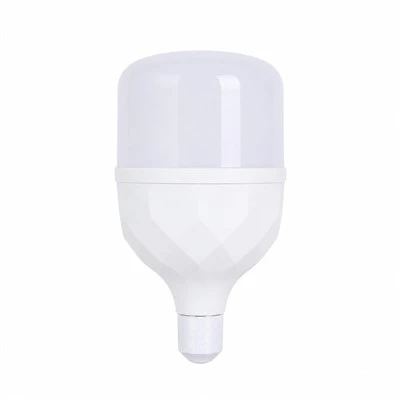
First off, let’s get the basics out of the way: what’s an A-shape bulb, anyway? For the uninitiated, it’s that classic “light bulb” shape—rounded top, screw base, fits most standard lamp fixtures. Think the ones you used in table lamps, ceiling fans, desk lights—super universal. Now, wattage itself is just a measure of how much electricity a bulb uses, right? But here’s the big twist: incandescents turn most of their electricity into heat, not light. LEDs? They’re way more efficient, so they give off the same light with way less power. That’s why the old “60W = 60W” rule doesn’t apply here.
So what’s the typical wattage for a modern A-shape LED? If you’re replacing that 60W incandescent you’ve had for decades, the standard LED equivalent is between 8W and 12W. Wait, that’s a huge drop, I know—but trust me, your utility bill will thank you. If you’re replacing a 40W incandescent, go for a 5W to 8W LED. And for the big boys, 100W incandescent replacements are usually 15W to 20W LEDs. But hold on—“typical” also depends on what you’re using the bulb for, and where it’s sold. Like, in the US, most of the A-shape LEDs we ship are in that 8W to 12W range because that’s the sweet spot for residential living rooms, bedrooms, and dining areas. European clients often lean a bit lower, like 7W to 10W, since their fixture standards and room sizes can be a little different.
But wait—why do some people get confused? A lot of brands still slap “60W equivalent” on their LED bulbs, and that number ties back to the old incandescent wattage, not the actual LED wattage. That’s a trick a lot of us suppliers have to navigate—we make sure our packaging is clear, so people don’t buy a 5W LED thinking it’s dimmer than a 60W incandescent. I’ve had so many clients call me panicking, saying “your bulbs are too weak!” until I explain that the wattage on the box is how much power they use, not how bright they are. Brightness is measured in lumens, not watts—10W LED is around 800 lumens, which is exactly what a 60W incandescent puts out. That’s the key takeaway here.
Now, let’s get into what factors change that typical wattage. First, brightness needs. If you’re putting a bulb in a closet or a nightstand lamp where you just need soft light, you can go lower—5W to 7W is enough, that’s around 450 lumens. For a kitchen under-cabinet light or a home office desk, you want brighter, so 10W to 12W (800 to 1,200 lumens) is better. And if you’re doing a statement ceiling light or a lamp that needs to fill a big room, you might go up to 15W, but even that’s way less than a 100W incandescent would’ve used back in the day.
Another factor is efficiency, which is a big deal for us as suppliers. Not all LEDs are made the same, right? Some brands use cheaper components, so their 10W LED only puts out 600 lumens—dim for its wattage. Our bulbs? We stick to parts that deliver at least 80 lumens per watt, so a 10W one is solid 800 lumens, just like you need. That’s why our typical A-shape LED lands in that 8W-12W range—we’re balancing brightness, energy use, and long life (our bulbs last 15,000 to 25,000 hours, way longer than incandescents’ 1,000 hours).
Wait, let’s address a common myth: is a higher wattage LED always better? Nope. If you put a 15W LED in a small nightstand lamp, it’ll be way too bright and might even overheat if the fixture isn’t rated for it. We always tell clients to match the LED’s actual wattage to their fixture’s max wattage, but also check the lumens. A lot of new homeowners don’t realize that fixture ratings are about heat and power, not brightness, so we make sure to highlight that in all our product specs.
Also, regulatory stuff plays a part in what’s “typical.” A few years back, the US phased out inefficient incandescents, so LED became the go-to. That’s why most of the A-shape LEDs available now are in that low-wattage range—manufacturers had to adjust to meet energy standards. In places like the EU, similar rules mean typical A-shape LEDs are even more energy-dense, so a 9W there is as bright as a 10W here. As a supplier, we ship both, depending on where our clients are based, so we always ask for the end use location to get the right fit.
Let’s talk about real examples, since numbers are easier when you can picture them. Last month, a client from a residential lighting company ordered 10,000 A-shape bulbs for a new apartment complex. They specified “typical for bedrooms and living rooms,” so we sent 9W for bedrooms (soft, 750 lumens) and 11W for living rooms (brighter, 900 lumens). Another client, a café owner, needed bulbs for their dining area—they wanted warm light, so we went with 10W A-shape, which gives off that cozy glow without using too much power, perfect for a busy spot. I see this all the time—every order’s a little different, but the typical core of our A-shape line stays in that 7W to 13W range, depending on client needs.
What about dimmable bulbs? A lot of people want dimmable A-shape LEDs for lamps, and those usually run a tiny bit higher wattage than non-dimmable. A dimmable 60W equivalent is around 10W to 12W, instead of 8W to 10W. That’s because the dimming circuitry adds a little power draw, but it’s worth it for the flexibility—clients love being able to adjust the light for movie nights or dinner parties. We make sure our dimmable A-shape bulbs are compatible with most standard dimmer switches, so no one has to buy a whole new set of switches to use them.
Another thing: color temperature doesn’t affect wattage, right? Correct. Whether you want warm white (2700K, that old incandescent yellow) or cool white (5000K, that bright daylight for offices), the wattage stays roughly the same. Our warm white A-shape 10W is 800 lumens, same as our cool white 10W—just a different color, no change in power use. That’s a common question we get, so we make sure to spell that out on our product pages, no hidden fine print.
Now, let’s circle back to why this matters for you, the person reading this. If you’re replacing a bulb, don’t just grab the same wattage as your old incandescent—look for “equivalent” on the LED, then check the actual LED wattage. If you see an A-shape LED that’s 8W-12W, that’s the typical size for most residential use, and it’ll save you like 85% on your lighting bill compared to incandescents. I’ve had clients tell me their electricity bill dropped $40 a month just switching all their bulbs to our LEDs—That’s the real win here, not just the bulb itself.
As a supplier, we don’t just sell bulbs—we help clients figure out what they need. Whether you’re a homeowner looking to redo your living room, a contractor outfitting a new build, or a retailer stocking their shelves, we can hook you up with the right A-shape LED, whether it’s that 9W soft white for a bedroom or 12W daylight for a kitchen. No matter what, we stick to that typical wattage sweet spot because it’s what works for 90% of the projects we get.
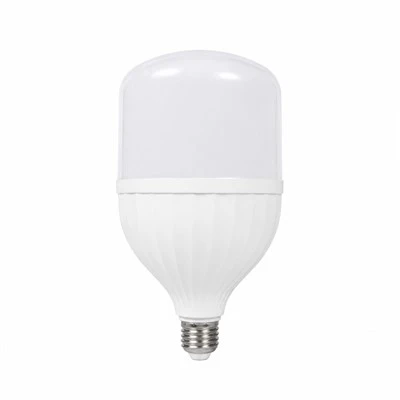
So to wrap this up: a typical A-shape LED bulb is 7W to 13W, depending on brightness needs, but the most common for residential use is 8W to 12W. Forget the old incandescent watt numbers—focus on lumens for brightness, and the actual LED wattage for energy use. If you’re in the market for reliable, high-quality A-shape LED bulbs, reach out to our team to talk through your requirements, no obligation, just straight answers. We’ve been doing this long enough to know exactly what works, and we’re here to make sure you get the right bulbs for your space.
LED T-Bulb References
- U.S. Department of Energy. (2023). Lighting Technology Fact Sheet: Light-Emitting Diodes (LEDs).
- International Energy Agency. (2022). Global Lighting Market Report: LED Bulb Efficiency Trends.
- Lighting Facts Label Program. (2021). ANSI/IES LM-79-19: Electrical and Photometric Measurements of Solid-State Lighting Products.
- National Electrical Manufacturers Association. (2020). A-Shape LED Bulb Standard Specifications for Residential Applications.
Hangzhou Lin’an Mingfeng Electric Parts Co., Ltd.
We are one of the most experienced LED a-shape bulb manufacturers and suppliers in China since 1996. We warmly welcome you to wholesale customized LED a-shape bulb made in China here from our factory. If you have any enquiry about pricelist and quotation, please feel free to email us.
Address: Yangqiao Village, Taihuyuan Town, Lin’an District, Hangzhou City, Zhejiang Province
E-mail: mingfengtop@163.com
WebSite: https://www.mingfengtop.com/
