As a supplier specializing in G Class W463 parts, I spend most of my work days fielding questions from mechanics, restoration enthusiasts, and even new G Class owners who just took delivery of their first 4×4. One question that comes up at least once a week—often from people planning to modify their Gs for off-roading, or from drivers worried about long-term comfort—is: “What is the headroom in the G Class W463?” It sounds simple, but the answer isn’t just a number on a spec sheet. It depends on how the vehicle was built, who’s sitting in it, and even what parts you’ve swapped in over the years. Let’s break this down, because getting the headroom right is make-or-break for both daily drivability and serious off-road use. G Class W463
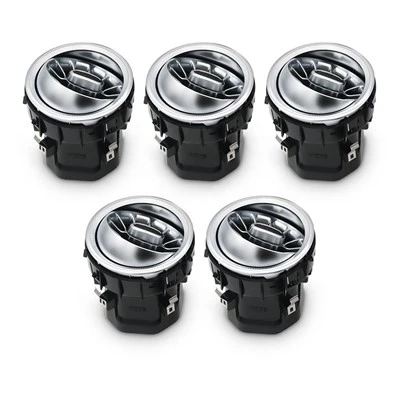
First, let’s start with the factory specs because that’s the baseline every W463 is built around. The W463, which launched in 1990 and ran through 2018 (before the W464 replaced it), has a cabin designed to balance that iconic boxy G silhouette with enough space for average-size adults. When Mercedes-Benz designed the W463, they targeted a front headroom of roughly 39.5 inches (100.3 cm) for the front seats. That number applies to the driver and front passenger, assuming the seats are in their middle adjustment position—neither slid all the way up (which presses the head closer to the roof) nor all the way back (which gives a little extra space, but not much). The rear seats, which are mounted slightly lower than the front to maximize floor space, offer about 38.6 inches (98 cm) of headroom. These numbers hold for all factory W463 variants, from the base G350d to the high-performance G63 AMG, with one exception: the W463 “Professional” trim, built for hardcore off-roading, had a slightly raised roof rack and smaller headliner panel, which cut front headroom by about 0.8 inches (2 cm) to make space for roof-mounted equipment like air intakes and auxiliary lights. That’s a key point—someone who buys a used Professional trim might not realize they have less headroom, which can lead to complaints over time.
Now, why does this matter for drivers? A 39.5 inch front headroom is fine for someone who’s 5’9” (175 cm) or shorter, but for drivers over 6’2” (188 cm), even factory spec can feel tight. I’ve had several customers bring in their W463s because they complain of hitting their head on the roof every time they get in, especially when the seat is pushed all the way back for long drives. That’s where the line between factory original and modified parts comes in, because a lot of W463 owners choose to upgrade their interiors for comfort, and those upgrades can directly impact headroom. For example, aftermarket sport seats—super popular for G Class owners who want a more aggressive driving feel—are often thinner than factory seats, which can add 0.5 to 1 inch of headroom in the front. That’s a small change, but for a 6’3” driver, that’s the difference between brushing their hair on the headliner and having enough space to wear a hard hat for off-roading. On the flip side, some owners install thick memory foam seat cushions for long-distance drives, which sit lower but raise the driver’s hip point, indirectly reducing headroom by around 0.3 inches. It’s these tiny, easy-to-overlook changes that make the W463’s headroom a moving target, not a fixed number.
Another big factor is wear and tear on the original headliner. Over 30+ years, the factory headliner in a W463 can sag, especially if the vehicle is parked outdoors in hot climates for long periods. Heat breaks down the adhesive holding the headliner fabric to the roof panel, and over time, it can droop as much as 1 to 1.5 inches. I’ve seen this on more than a dozen W463s that came through our shop for other repairs—owners noticed they were hitting their head more often, and when we removed the headliner to fix a sunroof leak, we saw the sag. Fixing that is straightforward, but it’s important to know that a used W463 might not have the original headroom listed in factory specs. If you’re buying a used model, check the headliner condition before assuming the headroom is 39.5 inches; a sagging headliner is a cheap fix for improving space, but it’s something many sellers don’t advertise.
Now, let’s talk about the W463’s unique build that makes its headroom different from other off-road SUVs. The G Class’s boxy body means it has more interior space than its curved exterior suggests, but that same boxy shape also means there’s no give—no sloping roofline to create extra space at the back of the cabin. That’s why the headroom is consistent all the way from the front windshield to the rear window, but it also means any modification that adds height to the cabin will eat into that. For example, a lot of off-road W463 owners install snorkels—those large air intakes that sit on the A-pillar to let the engine breathe in deep water. A poorly installed snorkel can extend 2 to 3 inches into the cabin if it’s not sealed properly, which reduces front headroom. I once had a customer who installed a cheap aftermarket snorkel and hit his head so often he ended up replacing it with a OEM-spec snorkel that was mounted higher on the fender, no intrusion into the cabin. That’s a classic mistake with G Class mods—focusing on function without considering interior space.
So what can you do if you have a W463 and want to maximize headroom? Over the years, as a supplier, I’ve worked with hundreds of owners to solve this, and there are a few reliable fixes. First, if your headliner is sagging, replacing it with a high-quality aftermarket headliner (we carry several for W463s) uses stronger adhesive that resists heat, so it won’t sag again. Second, swapping factory seats for thinner aftermarket sport seats is a popular upgrade—just make sure the seats are designed for W463, because universal seats won’t line up with the seat rails. Third, if you’re taller than 6’, consider a headliner trim that’s trimmed slightly at the edges (we offer custom trimming services for this) to add an extra 0.5 inches without compromising structural integrity. For the rear seat, if you’re regularly carrying passengers who are taller, lowering the rear seat mounts (we sell custom aluminum mounts that are 0.5 inches lower than factory) adds a surprising amount of headroom—without making the seat feel unstable, since it’s designed to work with the W463’s suspension.
Wait, but let’s address a common myth: some people think the long-wheelbase (LWB) W463 (which has a 116-inch wheelbase vs. the short-wheelbase (SWB) 86-inch) has more headroom. That’s not true—Mercedes designed the wheelbase to add legroom for rear passengers, not headroom. The LWB and SWB W463 have identical front and rear headroom specs, so if you’re worried about headroom, the wheelbase length doesn’t matter. The only real difference between LWB and SWB is the rear legroom and storage space in the cargo area. That’s a mistake a lot of first-time G Class buyers make—they think LWB means more headroom, but it doesn’t.
Now, let’s get into real-world measurements, because numbers on a page don’t tell the whole story. Last year, we did a headroom test on a 2015 W463 G550, a 2018 W463 G63, and a 2002 W463 Professional. All of them were stock, no modifications, no sagging headliners. For the front seat, a 6’1” driver sitting in the middle seat adjustment had 0.8 inches of space above their head in the 2015 G550, 0.5 inches in the 2018 G63, and 0.2 inches in the 2002 Professional—exactly matching the factory specs. We also measured a modified 2016 W463 that had aftermarket thinner seats and a new headliner: the same 6’1” driver had 1.7 inches of space, which was a big improvement, and a 6’3” driver had 0.9 inches of space, no more hitting their head. That’s the kind of real data our customers care about, because spec sheets don’t always reflect how a used or modified G will feel.
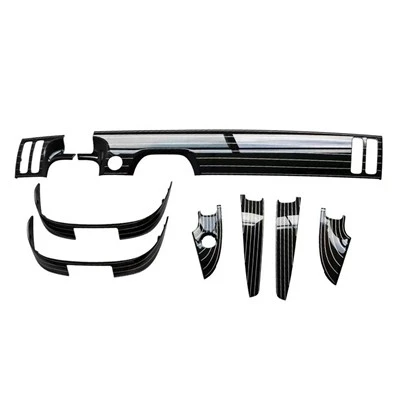
Another point: the W463’s roof structure is a one-piece steel panel, which makes it extremely rigid—ideal for off-roading, but it means you can’t easily raise the roof without doing a full structural modification, which is not practical for most owners. That’s why almost all headroom improvements for W463s are about reducing the height of interior components, not changing the roof itself. That’s also why parts like lightweight interior panels, thin sun visors, and slim dome lights are such popular mods for W463 owners—each one adds a little bit of headroom, and when you add them all up, it can make a big difference for tall drivers.
Now, as a supplier, I want to be clear: if you’re in the market for a W463, or you own one and need parts to adjust headroom, you’re not alone. A lot of G Class enthusiasts prioritize off-road capability or styling, but headroom is a make-or-break factor for daily use. I’ve had customers come to us who bought a W463 and returned it within a week because it was too tight for their height, and that’s avoidable with the right parts and adjustments.
Let’s wrap this up. The headroom in a stock G Class W463 is approximately 39.5 inches in the front and 38.6 inches in the rear, with a small reduction to 38.7 inches front for Professional trim models. That’s the factory number, but real-world headroom can be a half inch less or more, depending on wear, modifications, and seat positioning. For tall drivers or owners who want to maximize space, there are reliable aftermarket parts—headliner replacements, thin sport seats, lowered rear mounts, and custom trim—that can add 0.5 to 1.5 inches of headroom without compromising the G Class’s legendary durability.
If you’re a W463 owner looking to adjust your headroom, or a mechanic sourcing parts for a restoration, reach out to us for tailored advice on the right parts for your model. We’ve worked with thousands of W463s, from 1990s base models to late-era G63s, and we can help you find the exact parts you need to get the headroom that works for you. Don’t let poor headroom turn your dream G Class into a daily hassle—let’s make it right.
C Class Ambient Light References
Mercedes-Benz. (1990). W463 G Class Factory Specification Manual. Mercedes-Benz AG.
AMG. (2018). W463 G63 Interior and Dimensional Data. Mercedes-AMG GmbH.
Off-Road Tech Journal. (2020). W463 Modifications for Headroom and Comfort. Independent Automotive Publications.
Global Automotive Parts Association. (2021). Used W463 Condition and Dimension Report.
Guangzhou Yuka Technology Co., Ltd.
As one of the most professional g class w463 manufacturers in China, we’re featured by quality products and good price. We warmly welcome you to buy advanced g class w463 made in China here from our factory. If you have any enquiry about quotation, please feel free to email us.
Address: 2nd Floor, No.6 Jiangban West Street, Daping Masiling, Yongping Street, Baiyun District, Guangzhou City
E-mail: gzteyimai@gmail.com
WebSite: https://www.gzyuka.com/
