As a supplier of elevator overspeed governors, I’ve had the privilege of witnessing firsthand the remarkable engineering that goes into ensuring elevator safety. One of the most critical aspects of an elevator overspeed governor is its ability to accurately detect speed changes. In this blog post, I’ll delve into the science and technology behind how sensors in an elevator overspeed governor detect speed changes. Elevator Overspeed Governor

The Importance of Speed Detection in Elevator Overspeed Governors
Elevator overspeed governors are safety devices designed to protect passengers and equipment in the event of an elevator car traveling at an unsafe speed. When an elevator car exceeds its rated speed by a certain margin, the overspeed governor is triggered, which then activates the elevator’s safety brakes to bring the car to a stop. This process is crucial for preventing catastrophic accidents, such as free falls or collisions.
Accurate speed detection is the cornerstone of the overspeed governor’s functionality. If the sensors fail to detect a speed change promptly or accurately, the safety mechanism may not be activated in time, putting the lives of passengers at risk. Therefore, the sensors in an elevator overspeed governor must be highly reliable and precise.
Types of Sensors Used in Elevator Overspeed Governors
There are several types of sensors commonly used in elevator overspeed governors, each with its own advantages and limitations. The most prevalent ones include centrifugal sensors, magnetic sensors, and optical sensors.
Centrifugal Sensors
Centrifugal sensors are based on the principle of centrifugal force. They consist of rotating weights attached to a spindle. As the elevator car speed increases, the rotational speed of the spindle also increases, causing the weights to move outward due to centrifugal force. When the speed exceeds a predetermined limit, the outward movement of the weights activates a mechanical switch or trigger mechanism.
The simplicity and reliability of centrifugal sensors make them a popular choice in traditional elevator overspeed governors. They are relatively inexpensive and can operate in a wide range of environmental conditions. However, they may be less accurate than other types of sensors, especially at lower speeds, and require regular maintenance to ensure proper functioning.
Magnetic Sensors
Magnetic sensors utilize the magnetic field generated by a rotating component, such as a pulley or a shaft, to detect speed changes. They typically consist of a magnet and a magnetic field sensor, such as a Hall effect sensor or a magnetoresistive sensor. As the rotating component moves, the magnetic field changes, which is detected by the sensor. The sensor then converts the magnetic field changes into an electrical signal, which is processed to determine the speed.
Magnetic sensors offer high accuracy and reliability, and they are less affected by environmental factors such as dust and dirt compared to some other sensors. They can also provide continuous speed measurements, which is beneficial for real-time monitoring and control. However, they may be more expensive than centrifugal sensors and require careful calibration to ensure accurate readings.
Optical Sensors
Optical sensors use light to detect speed changes. They usually consist of a light source, such as an LED, and a light detector, such as a photodiode or a phototransistor. The light source emits a beam of light, which is interrupted by a rotating component with evenly spaced markings or slots. Each time the light beam is interrupted, the light detector generates an electrical pulse. The frequency of the pulses is proportional to the speed of the rotating component, allowing the sensor to determine the speed.
Optical sensors are known for their high precision and fast response times. They can provide accurate speed measurements even at high speeds and are relatively immune to electromagnetic interference. However, they can be sensitive to dirt, dust, and other contaminants, which may block the light beam and affect the accuracy of the measurements. They also require a clean and well-lit environment to operate effectively.
How Sensors Detect Speed Changes
Regardless of the type of sensor used, the basic principle of speed detection in an elevator overspeed governor involves converting the physical movement of the elevator car or its components into an electrical signal or a mechanical action.
When the elevator car starts moving, the rotating components, such as the drive sheave or the governor pulley, also start rotating. The sensor is designed to detect the rotation of these components and measure their speed. As the speed of the elevator car increases or decreases, the rotational speed of the components changes accordingly, which is reflected in the output of the sensor.
The sensor continuously monitors the speed and compares it to a pre – set threshold value. This threshold value is determined based on the rated speed of the elevator and the safety requirements. When the measured speed exceeds the threshold, the sensor sends a signal to the control system of the overspeed governor.
The control system then processes the signal and activates the appropriate safety mechanism. In most cases, this involves engaging the elevator’s safety brakes, which grip the guide rails and bring the elevator car to a safe stop.
Factors Affecting Sensor Performance
Several factors can affect the performance of sensors in an elevator overspeed governor. One of the most significant factors is environmental conditions. High temperatures, humidity, dust, and vibrations can all have a negative impact on the accuracy and reliability of the sensors.
For example, in a hot and humid environment, the electrical components of the sensors may be prone to overheating and corrosion, which can lead to malfunctions. Dust and dirt can accumulate on the sensors, especially optical sensors, and interfere with their ability to detect changes accurately. Vibrations can also cause mechanical stress on the sensors, leading to wear and tear over time.
Another factor is the quality of the sensor installation. If the sensors are not installed correctly, they may not be able to detect the speed changes accurately. For example, misalignment of a magnetic sensor can result in inaccurate magnetic field measurements, while improper positioning of an optical sensor can cause the light beam to be blocked or misaligned.
Regular maintenance is also crucial for ensuring the proper performance of the sensors. This includes cleaning the sensors, checking for any signs of damage or wear, and calibrating them periodically to ensure accurate readings.
Advancements in Sensor Technology
In recent years, there have been significant advancements in sensor technology for elevator overspeed governors. These advancements have led to improved accuracy, reliability, and functionality of the sensors.
One of the key advancements is the development of digital sensors. Digital sensors offer higher resolution and more accurate measurements compared to analog sensors. They can also communicate directly with the elevator’s control system using digital protocols, allowing for easier integration and more sophisticated monitoring and control.
Another advancement is the use of smart sensors. Smart sensors are equipped with built – in microprocessors and algorithms that can analyze the sensor data in real – time. They can detect abnormal speed changes, predict potential failures, and even perform self – diagnostic tests. This helps to improve the overall safety and reliability of the elevator overspeed governor.
Why Choose Our Elevator Overspeed Governors
As a leading supplier of elevator overspeed governors, we are committed to providing the highest quality products and services to our customers. Our overspeed governors are equipped with state – of – the – art sensors that ensure accurate and reliable speed detection.
We use a combination of different types of sensors to take advantage of their respective strengths. For example, we may use magnetic sensors for their high accuracy and reliability, and complement them with optical sensors for fast response times and high precision.
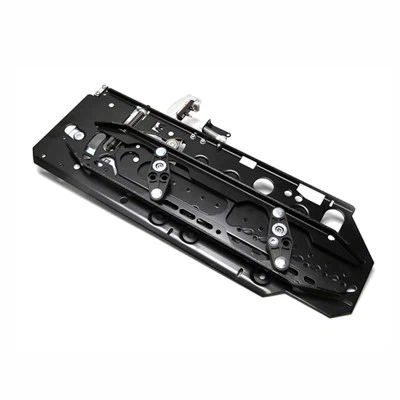
Our sensors are designed to withstand harsh environmental conditions and are rigorously tested to ensure long – term performance. We also offer comprehensive maintenance and support services to ensure that our overspeed governors continue to operate safely and efficiently throughout their lifespan.
Elevator Contactor If you are in the market for elevator overspeed governors or need to upgrade your existing safety systems, we invite you to contact us for a consultation. Our team of experts is ready to assist you in finding the best solution for your specific needs. Whether you are an elevator manufacturer, a building owner, or a maintenance contractor, we are confident that our products and services will meet and exceed your expectations.
References
- "Elevator Safety and Code Requirements" by the American Society of Mechanical Engineers (ASME)
- "Sensor Technology Handbook" by Jon Wilson
- Research papers on elevator safety and sensor technology in leading engineering journals such as "IEEE Transactions on Industrial Electronics"
Sanjin Elevator Parts Co., Ltd.
Sanjin Elevator Parts Co., Ltd. is one of the most professional elevator overspeed governor manufacturers and suppliers in China, featured by quality products and good service. Please rest assured to buy or wholesale high-grade elevator overspeed governor at competitive price from our factory.
Address: 18th Floor, Xinyuan Center, Fenghe Road, Xi’an, Shaanxi, China
E-mail: elevatorparts@westdt.com
WebSite: https://www.sanjinelevator.com/
